How are we following Christ today?

We continue to follow Christ through Peter. Now in our third week with the one dubbed as first among equals, today’s passage is downright surprising!
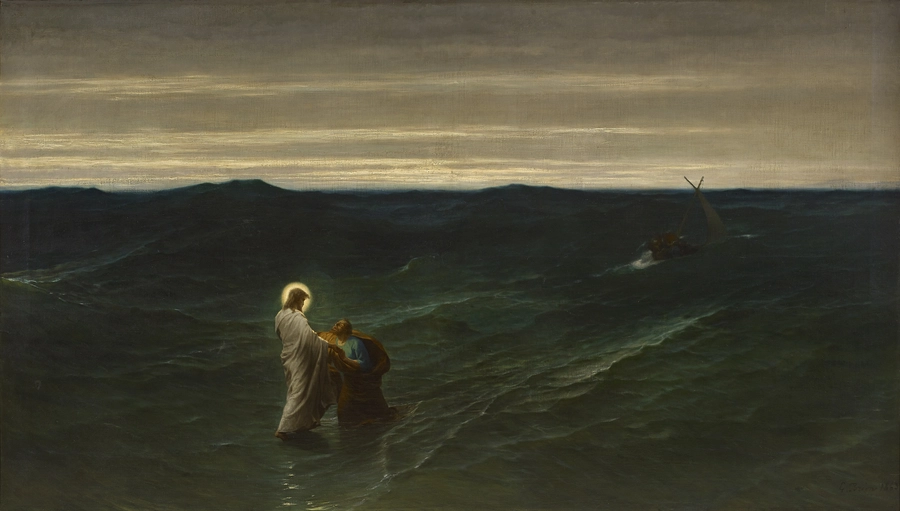
Jesus tells his friends that he will go to Jerusalem and suffer greatly at the hands of the elders, the chief priests, and the scribes. He will die. In an urgency to hold on to Jesus, to prevent this death, Peter clings to him with his words, “God forbid…” And the surprising response would have shaken the faith of anyone who gave up everything to follow this rabbi. Jesus, responding to Peter, the one he declared as Rock and saved from walking on the water, tells him, “Get behind me, Satan.” Jesus is no coward! He is determined to carry out the Father’s will and cannot be deterred by the desire to be clung to, protected, and saved by his friends. Peter judged our Lord’s mission by human standards rather than God’s unimaginable plan of self-emptying love. It is only Jesus who stares down Satan face to face in this moment ahead of him – the Cross.
To our surprise, Jesus tells us that if we wish to follow him, we deny ourselves, take up our cross, and follow him. The prophet Jeremiah gives us insight into this type of discipleship. The First Reading is an anguished prayer after the priest Pashhur had beaten the prophet and placed him in the stocks. Jeremiah prayed, “You duped me, O LORD, and I let myself be duped …” Duped is not understood as trickery or deception. The Hebrew can mean, “You enticed/persuaded me; and I was enticed/persuaded.” Meaning, when Jeremiah says yes to following God, God did not literally lie; Jeremiah feels overwhelmed by the prophetic mission God gave him.
Christianity is not a self-help religion. It is a relationship through suffering. We pick up our cross and follow the Lord. Through suffering, God’s plan is revealed, and we are duped, enticed, and persuaded into love. We do not become Christians to escape suffering, but through it we are “transformed by the renewal of [our] mind, that [we] may discern what is the will of God, what is good and pleasing and perfect.”
The surprise is that God does not tell us to suffer and watch us like a teacher during an exam. No, God is there with us in our suffering because he modeled it himself with complete perfect love. God never abandons us.
So the question this Sunday is: how do we search for God? The psalmist gives the answer with the opening line of Psalm 62: “O God, you are my God; at dawn I seek you.” The verb for seeking has its roots in the noun for dawn. It conveys the complex notion of searching for God at dawn.

Night can represent suffering, uncertainty, and life’s complexity. The psalmist reminds us to seek God through all of it; seek God through suffering, by picking up our cross each day, and the morning will come. As dawn breaks, we will find the one whom our soul longs for; our body and soul will find love.
Leave a Reply