Chapter 2.1-5
| To be worthy of the task of governing a monastery, the abbot must always remember what his title signifies and act as a superior should. He is believed to hold the place of Christ in the monastery, since he is addressed by a title of Christ, as the Apostle indicates: You have received the spirit of adoption of sons by which we exclaim, abba, father (Rom 8:15). Therefore, the abbot must never teach or decree or command anything that would deviate from the Lord’s instructions. On the contrary, everything he teaches and commands should, like the leaven of divine justice, permeate the minds of his disciples. |
Commentary
In the Prologue, Benedict presented Jesus as king, teacher, and guide. Now, at the opening of Chapter Two, Jesus is Father in the person of the abbot.
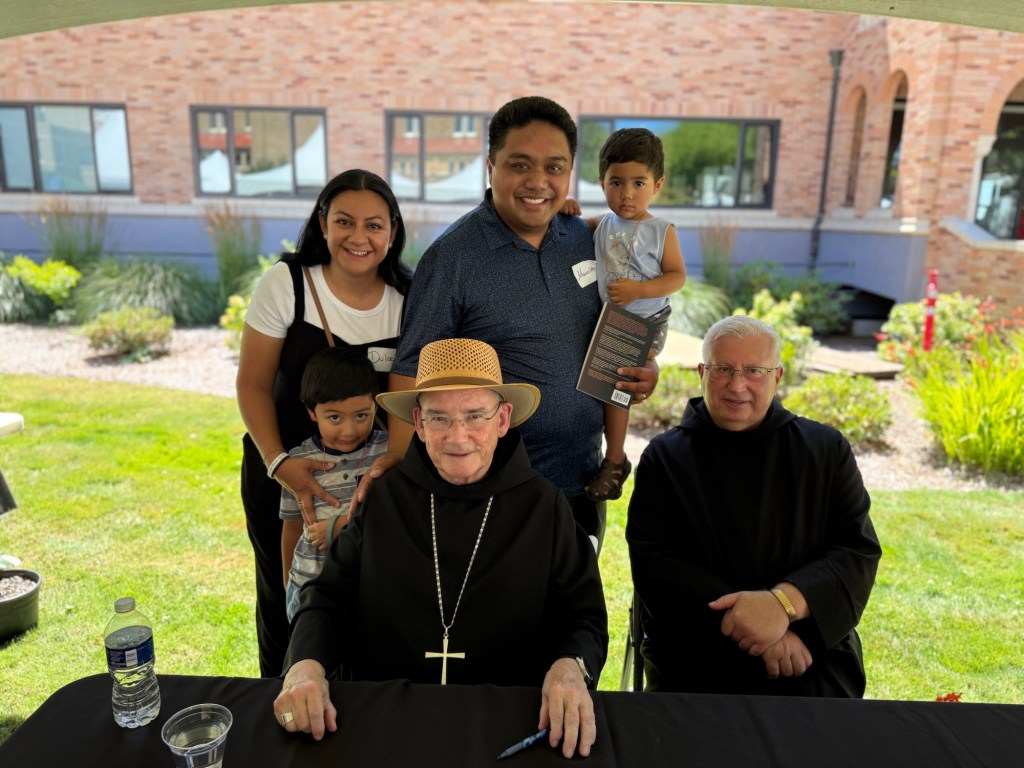
Since I first ascended Mount Angel, I have known three abbots: Abbot Nathan Zodrow (2001-2009), Abbot Gregory Duerr (2009-2016), and Abbot Jeremy Driscoll (2016-present). All these men have led with their own style rooted in their relationship with Christ.
The abbot is conformed to Christ and docile to the movement of the Holy Spirit. He must be able to articulate the will of God for his monks and not his agenda. The abbot’s leadership is filial more than it is hierarchical. By holding the place of Christ in the monastery, Benedict demonstrates the Lord’s central role in the monastery and the Rule. The Rule is an extension of the Gospels, and the Abbot is the presence of a loving Father of monks who need direction in the spiritual life.
We must be attentive to that special moment when Jesus speaks, for his words are words of leaven wisdom. For something to be leaven, it undergoes a process that is thorough and slow. Growing in wisdom takes time. As a father, Jesus wants us to remember his words and allow his words to mature us. We may not all be monks, but we can make our lives a monastery where we pursue God in an intentional community of believers who are obedient to God’s authority and love for each of us as a father.
Prayer
Abba, speak to my heart. You are a “father of the fatherless and defender of the widows” (Psalm 68:5). In You, I find refuge and security. Let me run into your arms of love where I know myself entirely in your love. Amen.
 Enlarge my heart
You are welcome to leave a reply.