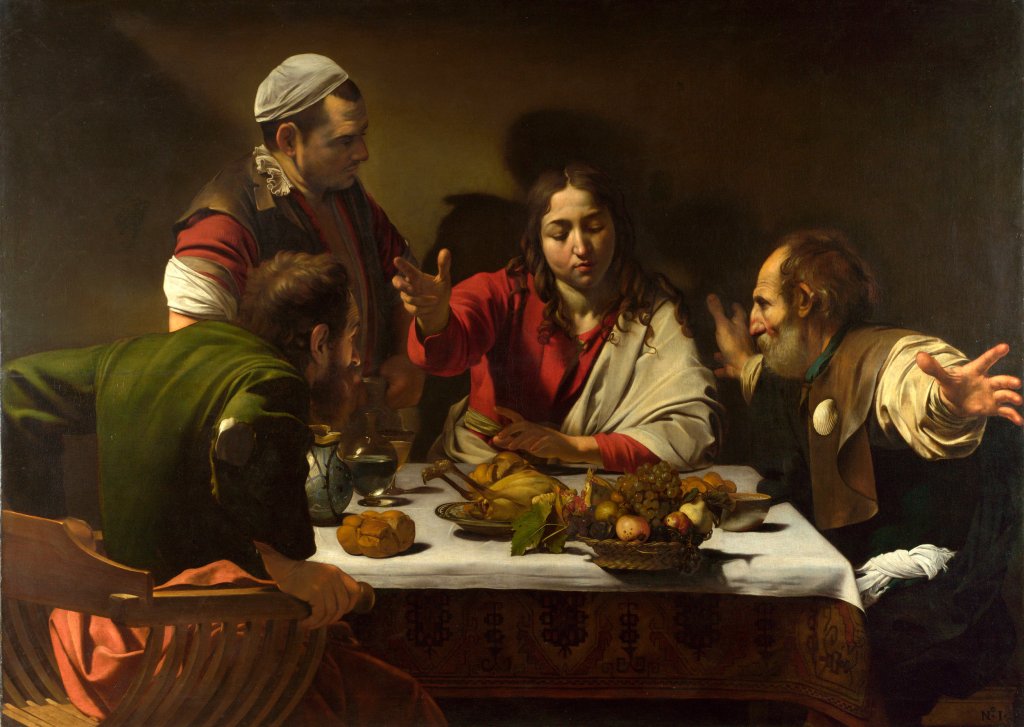
On Easter Day, as the sun was setting, two disciples walked away from Jerusalem, headed for Emmaus, located seven miles outside the holy city. They were distraught, uncertain of the future, for their Lord was crucified. Then, they meet the stranger.
This story reminds us that Jesus walks with us in every season of our lives. He never abandons us, and we must ask for the gift to recognize him.
Peter tells the crippled man to rise and walk “in the name of Jesus Christ the Nazorean.” The crippled man is healed and glorifies God. Two of Jesus’ disciples were walking away from Jerusalem, and they met the Lord on their journey. Both these accounts teach us that walking is a spiritual exercise. The recognition of Jesus walking with us is an Emmaus moment.
Jesus will walk with us so that we are aware of his presence. Other times, Jesus will walk in front of us so that he can guide us on where the journey will pivot and curve. It is an act of trust (Psalm 23:4). Then, there are times Jesus walks behind us because he has equipped us to navigate the way.

When I think of the Emmaus story, Daniel Bonnell’s work comes to mind. He has masterfully layered colors in this piece; the deep blue sky dominates the canvas with strokes of pink, purple, and orange. The dramatic landscape mirrors the distraught disciples’ internal journey as they walk with the stranger. The colors allude to loss and bereavement, but also to passion.
The two with the stranger at the right-hand corner of the painting look so vulnerable against this backdrop. Yet as they go, the new day comes with the brilliant sunlight that will transform the sky.
They recognized Jesus in the breaking of the bread, and their hearts burned with love for him. They ran back to Jerusalem to tell the others. Saint Augustine commented on this:
Jesus broke the bread, they recognized him. Then we should no longer say that we do not know Christ! If we believe, we know him! Indeed, if we believe we have him! They had Christ at their table, we have him in our souls! Having Christ in one’s own heart is far more than having him in one’s house: in fact, our hearts are more intimate to us than our homes” (Sermon 232, VII, 7).
Let us be on the way! Jesus lives in our hearts, not as a museum artifact, but as the Living One who dies no more!
 Enlarge my heart
You are welcome to leave a reply.