In Mediterranean culture, family and friends shared one bowl at meals. It was an expression of their closeness. This reveals something hidden in the Holy Thursday account: friendship and intimacy with Jesus.
How did Judas and Peter handle the weight of Jesus’ love on the night he was betrayed?
At the Last Supper, when Jesus hands the morsel to Judas Iscariot, he dips it into the common bowl. He is silently pleading with his betrayer. Jesus is reminding Judas that he loves him as his own and grants him the freedom to betray with a kiss. Judas will fall into despair.
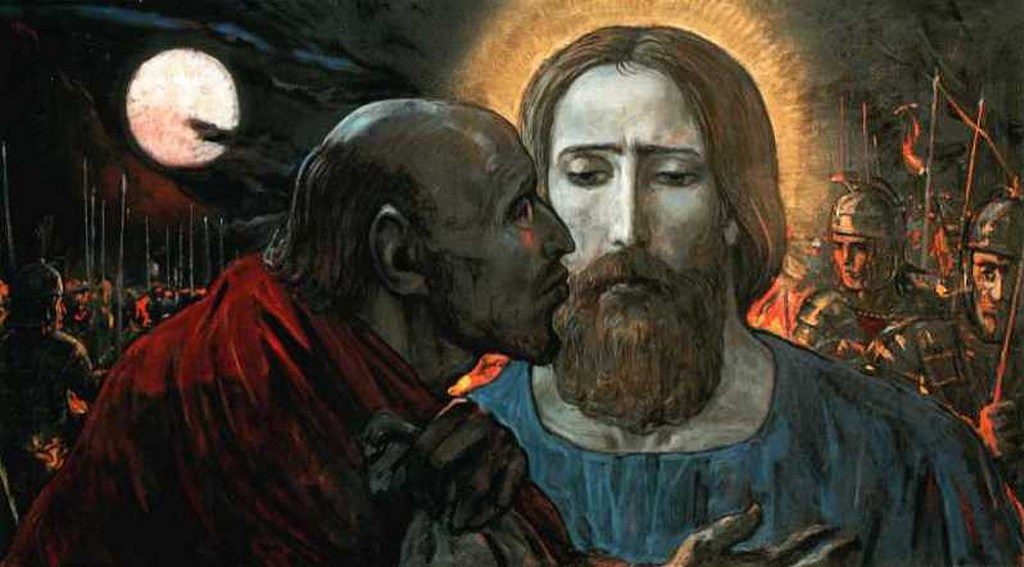
Then there is Peter. He will play his role in the drama of Christ’s passion as both Petra and skandalon, Rock of God and the Stumbling Block. Peter will hear the cock after he denies his Lord, yet he will repent and strengthen his brothers to lead the Church.
We will encounter Jesus and Peter in an intimate portrayal of love tonight in the liturgy’s complex rites and rituals, found nowhere else in the liturgical year: the washing of the feet. This act of charity moves my whole being. This act is depicted in Ford Madox Brown’s Christ Washing Peter’s Feet, housed at the Manchester Art Gallery.
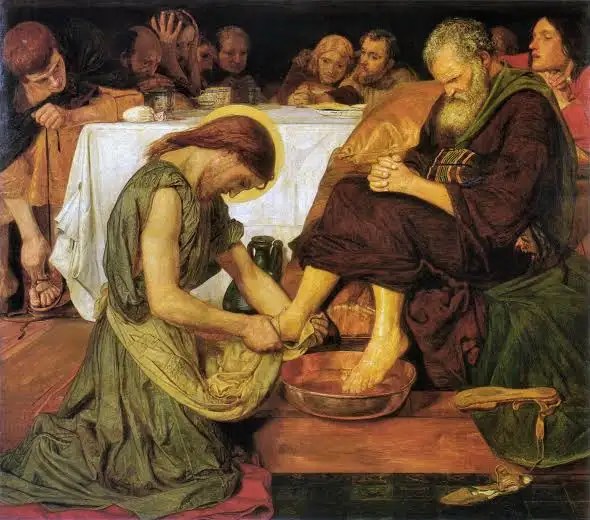
Peter’s poise moves me. His hands clasped in prayer. Peter witnesses his Master become his intimate friend as he touches and washes his feet. Jesus washes the dirt from the tremendous journey we have all taken since the Exodus. With his loving hands, he scrubs the filth that makes our journey in life unbearable, ugly, and horrendous. The faces of those gathered around Jesus capture the many emotions we face this passionate evening. Some are in utter disbelief that their Messiah would lower himself to be a servant. Others are pensive about how a lover can draw close to his beloved.
When I think of Peter, I think of my own life. My feet are dirty; my life is not perfect. Yet, my savior draws near me. He takes my feet into his hands, washes them, tenderly kisses them, and makes them clean. As Jesus washes my feet, I fall in love with him anew.
So what can we learn from Judas and Peter? Both of these men were called by Jesus and saw something extraordinary about him. Both witnessed exceptional graces as they shared in Jesus’ mission. They witnessed the raising of Lazarus and the casting out of devils. They had the immense joy of living with Jesus and shared a special intimacy with him. How then did they turn out differently?
Judas began to cut corners. He thought he knew better than others. He was with the apostles but was not of one mind, and he grew in small infidelity. He had an I deserve attitude.
Peter made many mistakes. Peter failed to walk on water. He had an attitude that he would never deny the Lord and stumbled. Yet, Peter desired to repent and ultimately love Jesus.
As we share in the Eucharist tonight, we are drawn into the mystery of Christ’s passion. We face a choice: to follow him on our own terms or to follow him with total surrender. Like Peter, we recognize our weakness and our tendency to stumble. We come forward to receive the Bread of Life, asking for the strength to be transformed into rocks of faith, steadfast in his love.


 Enlarge my heart
You are welcome to leave a reply.