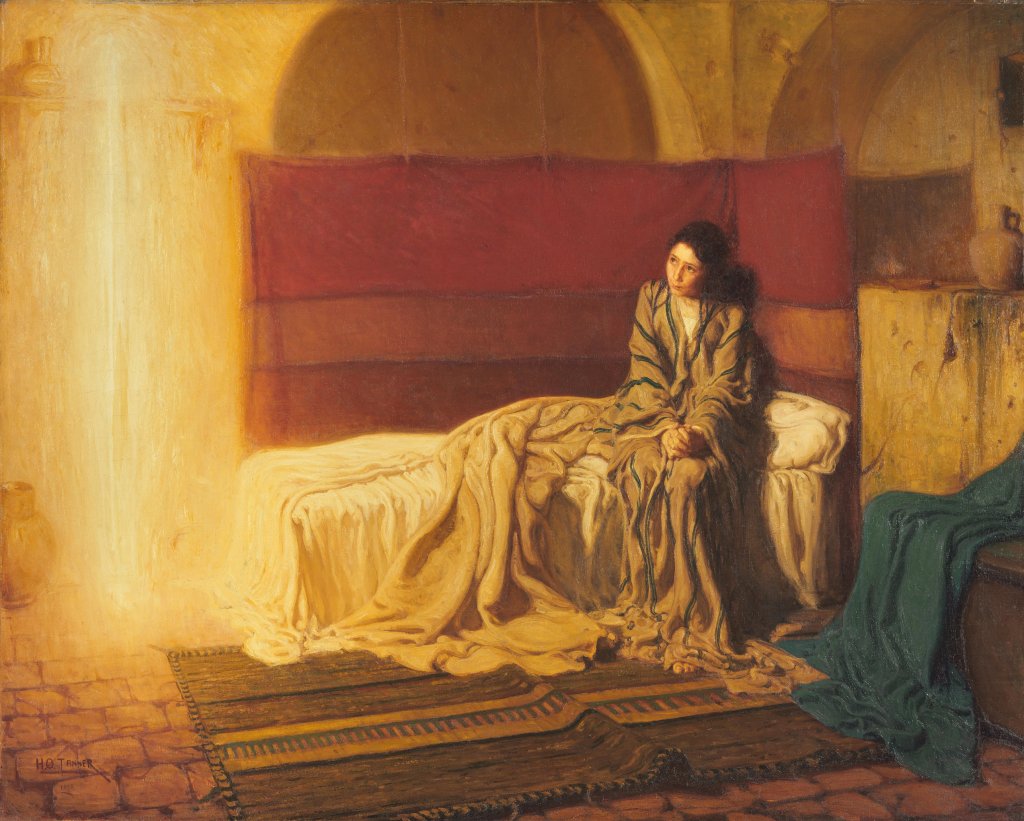
The artwork above is a masterpiece I cherish for its utter simplicity. The Annunciation by Henry Ossawa Tanner was painted in 1898. Tanner visited the Holy Land and was a master at realism. Mary sits quietly in her room, depicted as a modern-day Palestinian home. The shaft of light is the presence of the Angel coming to announce Mary’s tremendous vocation. In this moment’s simplicity, light fills the room. Light illumines the viewer’s heart for sustained contemplation. This event, known as the Annunciation, sets humanity on a new trajectory. We celebrate this event today.
The Annunciation offers a profound, two-fold lesson: life is fundamentally defined by our relationship with God, and it calls us to a life of contemplative trust in His divine plan.
Life is About Our Relationship with God
To see our relationship with God on full display, we have to turn to another masterpiece: the Sistine Chapel. Popes have been elected in the Sistine Chapel since 1492, and since 1878, it has been the permanent venue for such elections. These events are known as a conclave. As the cardinals enter the Sistine Chapel, they are captivated by Michelangelo’s masterful work depicting the origins of our relationship with God.
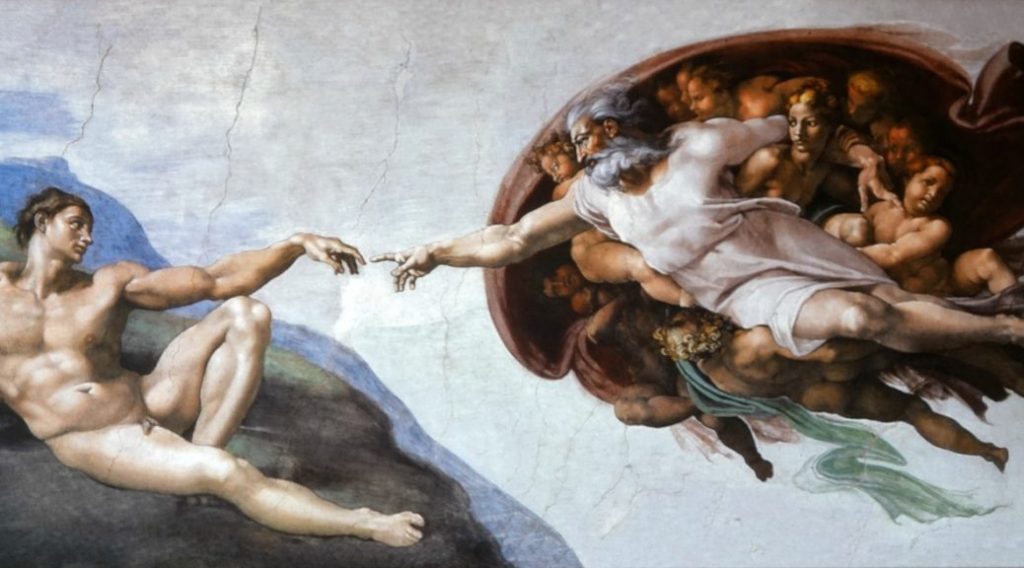
While the Creation of Adam is the most popular fresco in the Sistine Chapel, it is not the center of the ceiling. The center is the Creation of Eve. The feminine genius of our anthropology rests at the center of the whole ceiling!
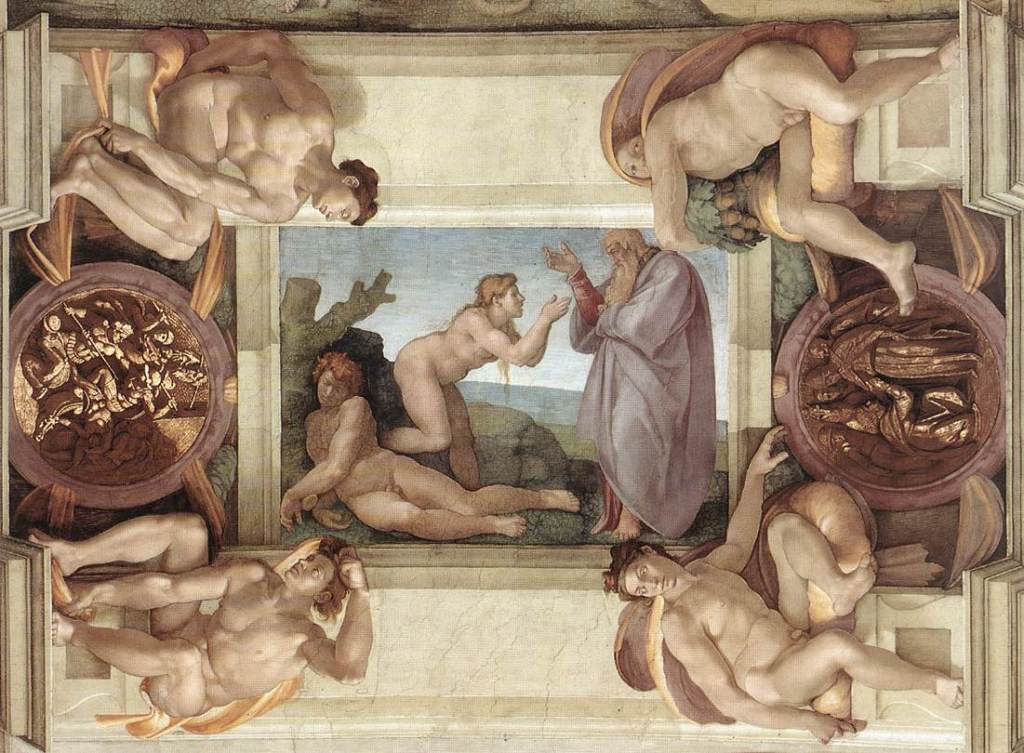
Knowing full well the story of our fall (Genesis 3), the Blessed Virgin Mary becomes the new Eve and hints at her coming when God tells the snake, “I will put enmity between you and the woman” (Genesis 3:15).
In the Annunciation, the Angel greets the Virgin with “Ave,” a royal greeting. What follows teaches us much about who she is. She is full of grace. The Greek word that expresses “full of grace” is κεχαριτωμένη. Kecharitomene suggests grace in abundance. This grace filled Mary from the beginning, and she overflowed with God’s favor, protection, and love from all eternity.
I used to think that grace was an obscure idea that we received supernatural powers to remain faithful to God. Joseph Ratzinger (later Pope Benedict XVI) offers another facet of grace. He said, “Grace in the proper and deepest sense of the word is not something that comes from God; it is God” (67-68). So when Mary is full of grace, she is filled with God’s presence, wholly and completely human. She has opened herself to the fullness of God’s plan “boldly, limitlessly, and without fear for her own fate.”
Such boldness for life in God comes with an abiding trust. That trust is apparent in the final sentence of today’s Gospel: “Then the angel departed from her.” At the end of this pivotal event, Mary is alone. She ponders in her heart the word given to her and hastens to her cousin Elizabeth.
God invites us to ponder his love in our hearts.
All the events of Mary’s life that will unfold in Christ become words that she contemplates in the deep recesses of her heart. She is alone before her loving God and is thrust into trusting the immense plan of God.
Mary knows how to dialogue with God in her heart. She models the life we are to imitate if we desire to love Jesus as deeply as she did as mother and disciple.
As you gaze at this beautiful work by Tanner, you see a young Jewish girl sitting in her room. At the same time, dig deeper with eyes of faith. You’ll contemplate God’s goodness as Father and God’s generosity to give all of us a Mother in his faithful servant. We are in good company.
 Enlarge my heart
You are welcome to leave a reply.