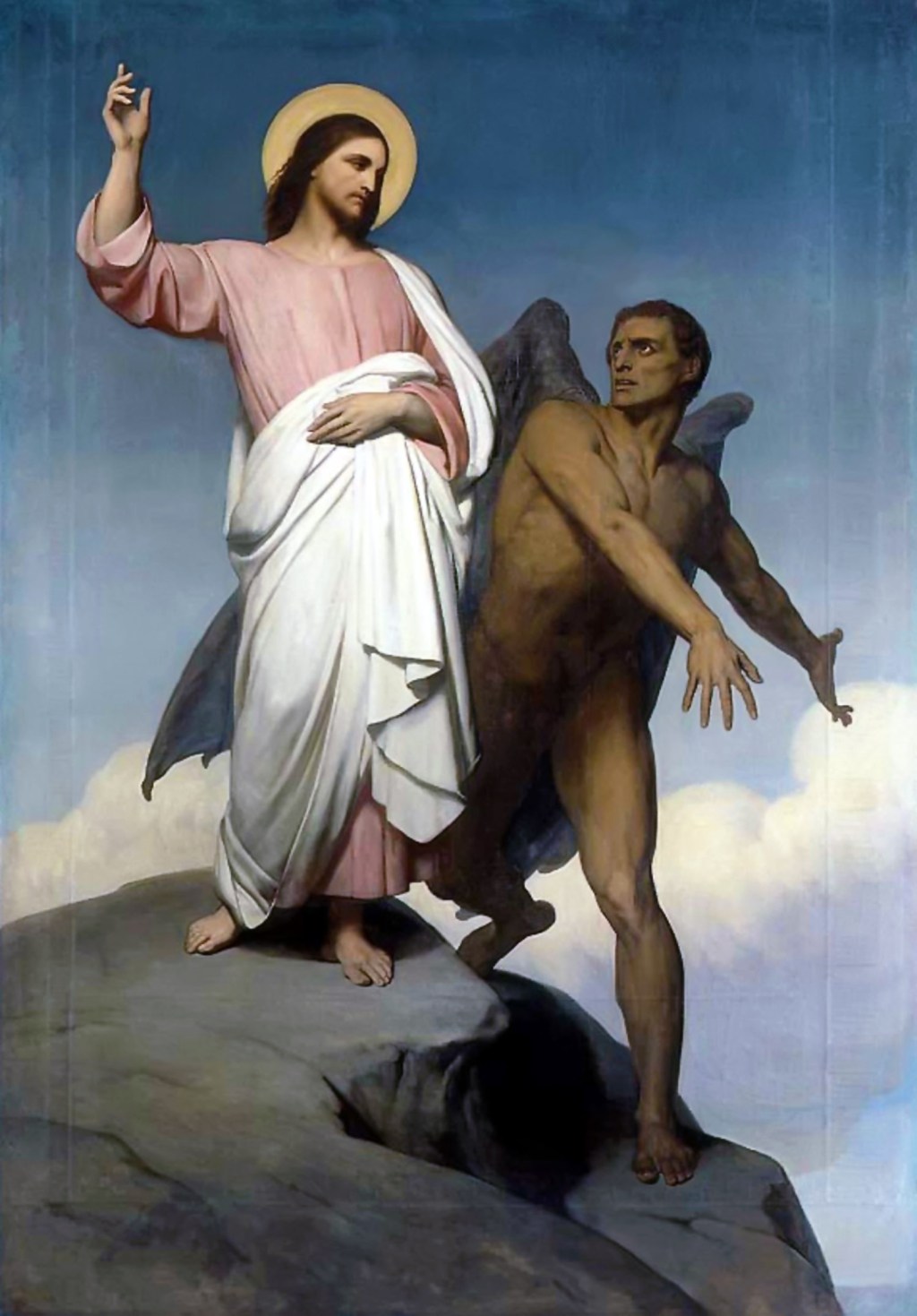
We have entered into the forty days of Lent. In this post, I will explore the significance of the number forty and examine Saint Matthew’s first temptation of Jesus, and what it teaches us about our proper understanding of God.
The number forty is rich with meaning in the scriptures. Jesus spent forty days and forty nights fasting in the desert (Matthew 4:2). When we hear the number forty, it reminds us of Israel’s forty years wandering in the desert. In their wanderings, Moses spent forty days on Mount Sinai before he received God’s commandments on the sacred tablets. Forty reminds us of Abraham, who spent forty days and forty nights on Mount Horeb. We also learn that the Church Fathers saw the number forty as a cosmic number. They saw the world as having four corners, and ten symbolized the commandments. We multiply the corners of the world and the ten commandments, and we arrive at forty, symbolizing the whole history of the world with God.
For forty days and forty nights, Jesus fasted in the desert, “and afterwards he was hungry” (Matthew 4:2). He relives Israel’s history and bears its drama to the end. Matthew and Luke both present the temptations of Jesus. The only difference is the order of temptations. This Sunday, we hear from Matthew’s account (4:1-11).
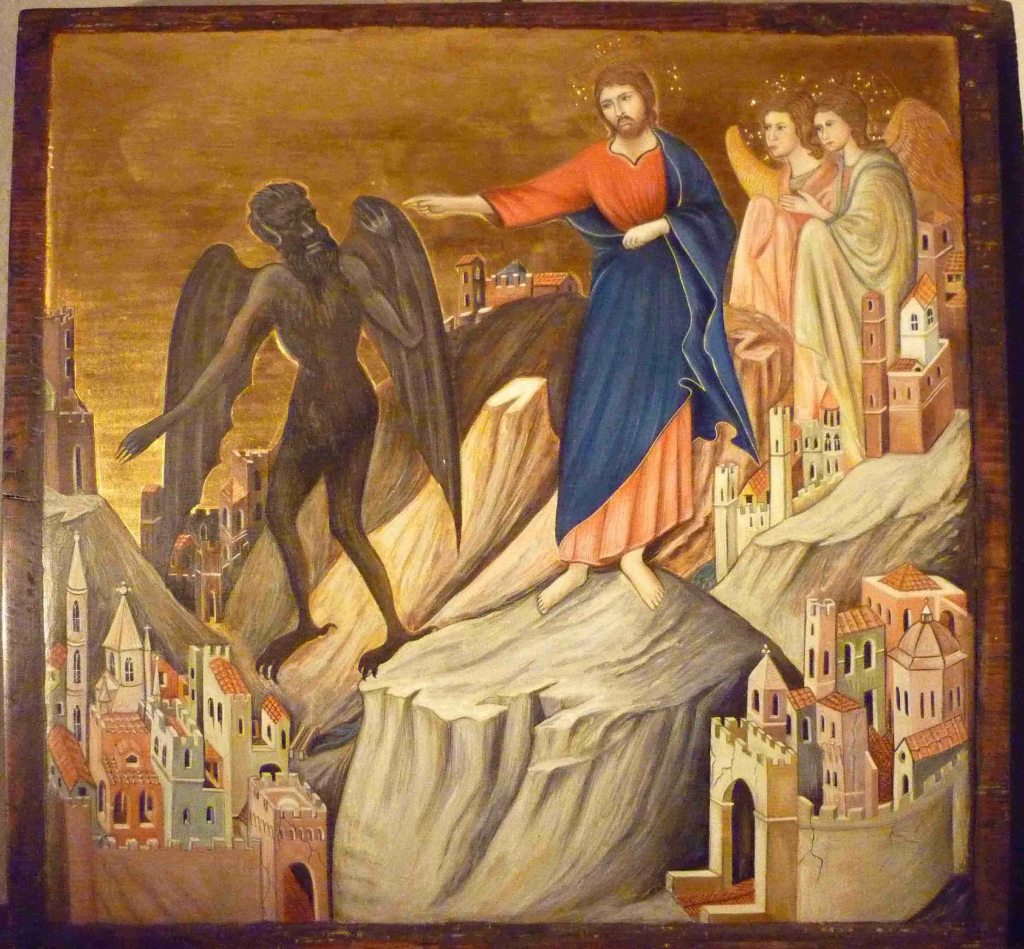
The tempter tries to provoke our Lord with the first temptation, “If you are the Son of God, command that these stones become loaves of bread” (4:3).

It is temptation, and it is also mockery. In questioning his sonship, we recall Jesus at the cross, when the bystanders mocked him and said, “If you are the Son of God, come down from the Cross” (Matthew 27:40).
We often make demands of God in our modern day. If you are the Son of God, end world hunger. If you are the Redeemer of the world, why suffering? If you are the world’s Savior and your Church is true, then let your Church satisfy the hunger of all third-world countries.
Our Lord refuses the tempter’s temptation. Yet, he satisfies the hunger of others in two significant ways: the multiplication of the loaves and the Eucharist. Here, we find the answer to the modern-day demand we make of God.
Jesus fed the thousands because they sought God; they were receptive to God’s word. God is the one who provides the bread. In this miracle, Jesus proves that he is concerned for our bodily needs and also for satisfying our longing for God—everything in proper order.
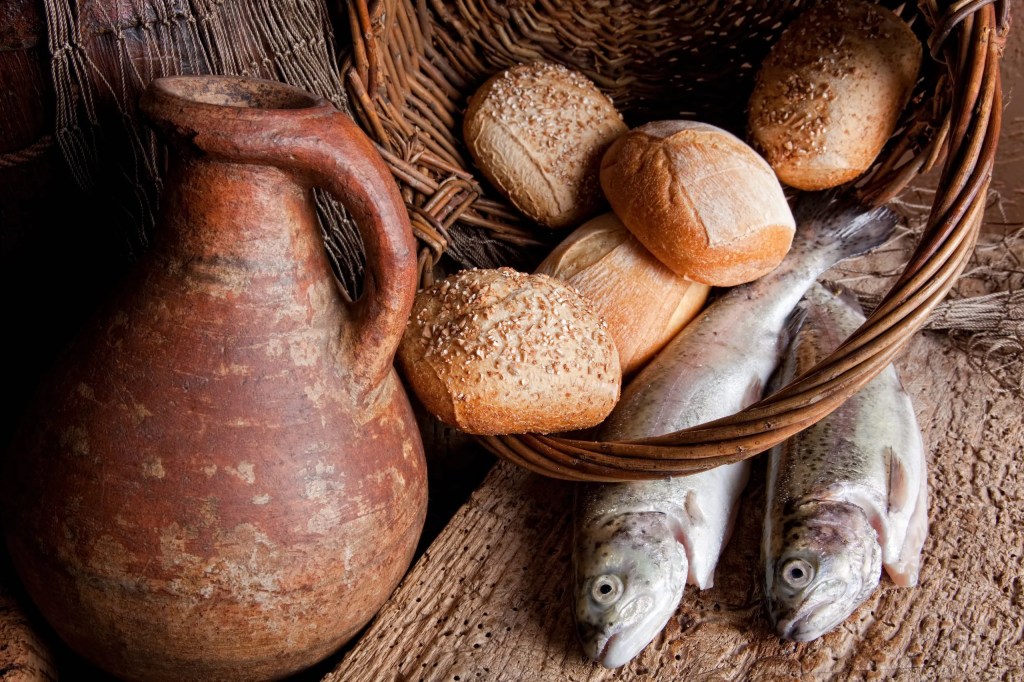
This desire to satisfy all our longings reaches its pitch in the Eucharist. The manna in the desert (Exodus 16) and the miracle of the multiplication of the loaves (Matthew 14:13-21, Mark 6:31-44, Luke 9:10-17, John 6:1-14) reach their climax at the Last Supper. Jesus no longer supplies bread; Jesus is the bread.
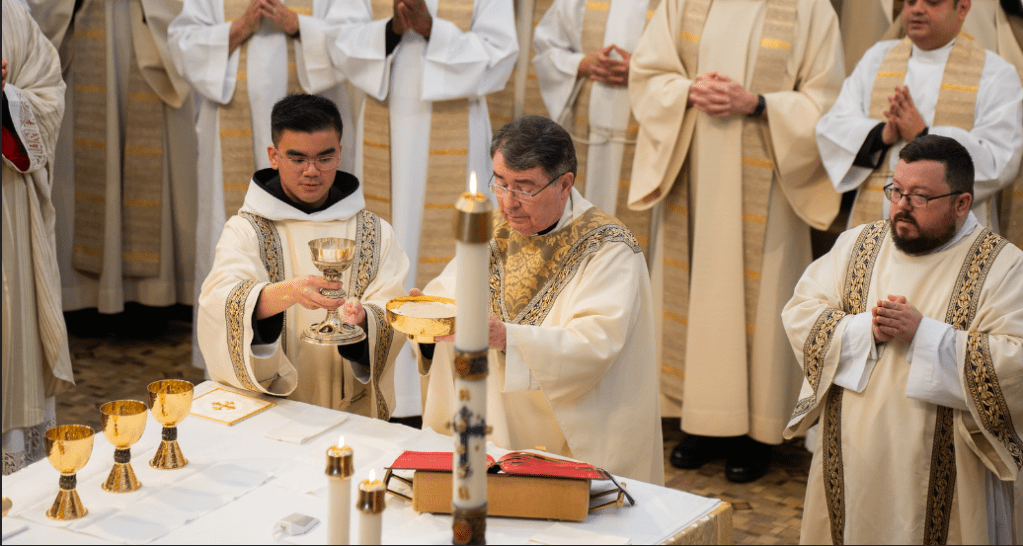
It is the bread we pray for in the Lord’s Prayer when we say, “Give us this day our daily bread.” The Greek word is ἐπιούσιος, which translates as “Give us today Tomorrow’s Bread.” Give us the Bread eaten in the Life to come. It is the Eucharist, which is the multiplication of bread that is never completely spent. Eucharist feeds every soul longing for God.
Jesus responds to the tempter: “One does not live by bread alone, but by every word that comes forth from the mouth of God” (Matthew 4:4). This temptation should prompt us to ask a question that must linger throughout the whole forty days of Lent.
The question is this:
“Does God have primacy in my life?”
Is God the navigating love that guides every horizon and decision? Or is God simply the One whom I demand proof of His own goodness if I am to take him seriously? Jesus invites us to reconnect our lives to God and live on God’s Word.
As we enter the desert of Lent, may we be receptive to God’s movements in our lives, may we be ready to listen intently to his loving commands, and at that moment, may manna fall down from heaven to satisfy every longing in our hearts.
 Enlarge my heart
You are welcome to leave a reply.