
Lent calls us to remember. Remember, the most important relationship that we have is rooted in God, whose love is so immeasurable and unfathomable. God invites us to the interior desert of our lives to be refashioned and renewed.
Pope Leo’s Lent 2026 message begins with a provocative claim on the season of Lent. Pope Leo XIV states:
Lent is a time in which the Church, guided by a sense of maternal care, invites us to place the mystery of God back in the center of our lives, in order to find renewal in our faith and keep our hearts from being consumed by the anxieties and distractions of daily life.
Maternal and constant. The Church is maternal, gently drawing us back to God and preparing to bring forth new life through the baptismal font at Easter. Within her, the light of Christ radiates, revealing us to one another as children of the same Father.
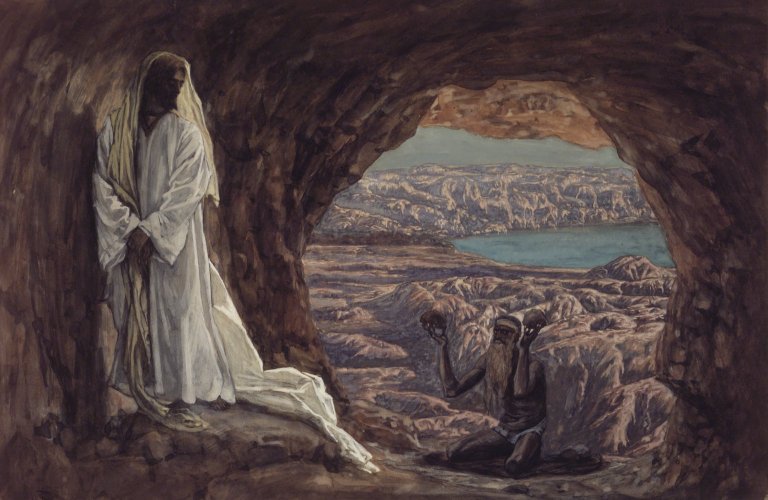
And so begins this deliberate time in the interior desert. Saint Benedict states that the life of a monk “must be a continuous Lent” (RB 49:1). To live a continuous Lent is to continually die to ourselves so that Christ can live in us. To have Lent before us is to be people on pilgrimage.
Our focus during these forty days is “to keep this manner of life most pure” (RB 49:3). Our Lord invites us to do four things for him. First, we must work. Second, we must pray with tears. Third, we must read. Finally, have compunction of heart.
We must work. Work prevents us from having idle time. Saint Benedict says, “Idleness is the enemy of the soul” (RB 48:1). Idle time welcomes temptation. What defines our Benedictine heart is our ability to work. Work expresses our relationship with the world around us. Work expresses our relationship with God. Our work is an offering of praise to God. It is the liturgy of work. Benedict says, “When they live by the labor of their hands, as our fathers and the apostles did, they are really monks” (RB 48:8-9).
Tears are a gift from God. Tears suggest a frankness with God in our prayer life. We must pray with sincere honesty before our loving God. The gift of tears has been a continuous theme in Lent. In his 2015 Ash Wednesday homily, Pope Francis said,
Returning to the Lord “with all your heart” means to begin the journey not of a superficial and transitory conversion, but rather of a spiritual itinerary with regard to the most intimate place of our person. The heart is, indeed, the seat of our feelings… It will do us good… to ask for the gift of tears, so as to render our prayer and our journey of conversion ever more authentic and free from hypocrisy.
Our Lord also invites us to read. Benedict tells us that during Lent, each person is to receive a book from the library. Each person is to read it straight through (RB 48:15). Reading helps us to listen well. Pope Leo XIV said,
This year, I would first like to consider the importance of making room for the word through listening. The willingness to listen is the first way we demonstrate our desire to enter into relationship with someone.
Try reading the Scriptures. Daily reflection on God’s Word does not make us smarter. It makes us more faithful to Christ and moves us to mission. Pope Leo XVI commented:
In the midst of the many voices present in our personal lives and in society, Sacred Scripture helps us to recognize and respond to the cry of those who are anguished and suffering.

Finally, compunction of heart. The Prayer Over the People in today’s liturgy of Ash Wednesday carries a provocative line:
“Pour out a spirit of compunction, O God, on those who bow before your majesty, and by your mercy may they merit the rewards you promise to those who do penance. Amen.”
Compunction. A word not commonly used in English, but one that carries a weighty significance.
Its Latin root, compunctio, denotes a sharp, intense prick. Compunction suggests holy sorrow, which comes from an awareness that we have turned away from God. Compunction is an unfiltered and brutally honest examination of our lives.
Work, pray with tears, read, and open your heart to God. These are things we can do this Lent with a Benedictine heart.
For a practical Lenten goal, look to the challenge set by Pope Leo XIV. He wants us to be kind and use words to build others up. He said,
I would like to invite you to a very practical and frequently unappreciated form of abstinence: that of refraining from words that offend and hurt our neighbor. Let us begin by disarming our language, avoiding harsh words and rash judgement, refraining from slander and speaking ill of those who are not present and cannot defend themselves. Instead, let us strive to measure our words and cultivate kindness and respect in our families, among our friends, at work, on social media, in political debates, in the media and in Christian communities. In this way, words of hatred will give way to words of hope and peace.
This Lent, strip everything back to two questions: What are you doing, and who are you doing it for? Let every sacrifice be an invitation for Jesus to draw nearer, so that the person who reaches the Empty Tomb isn’t the same one who began this day with ashes.
 Enlarge my heart
You are welcome to leave a reply.