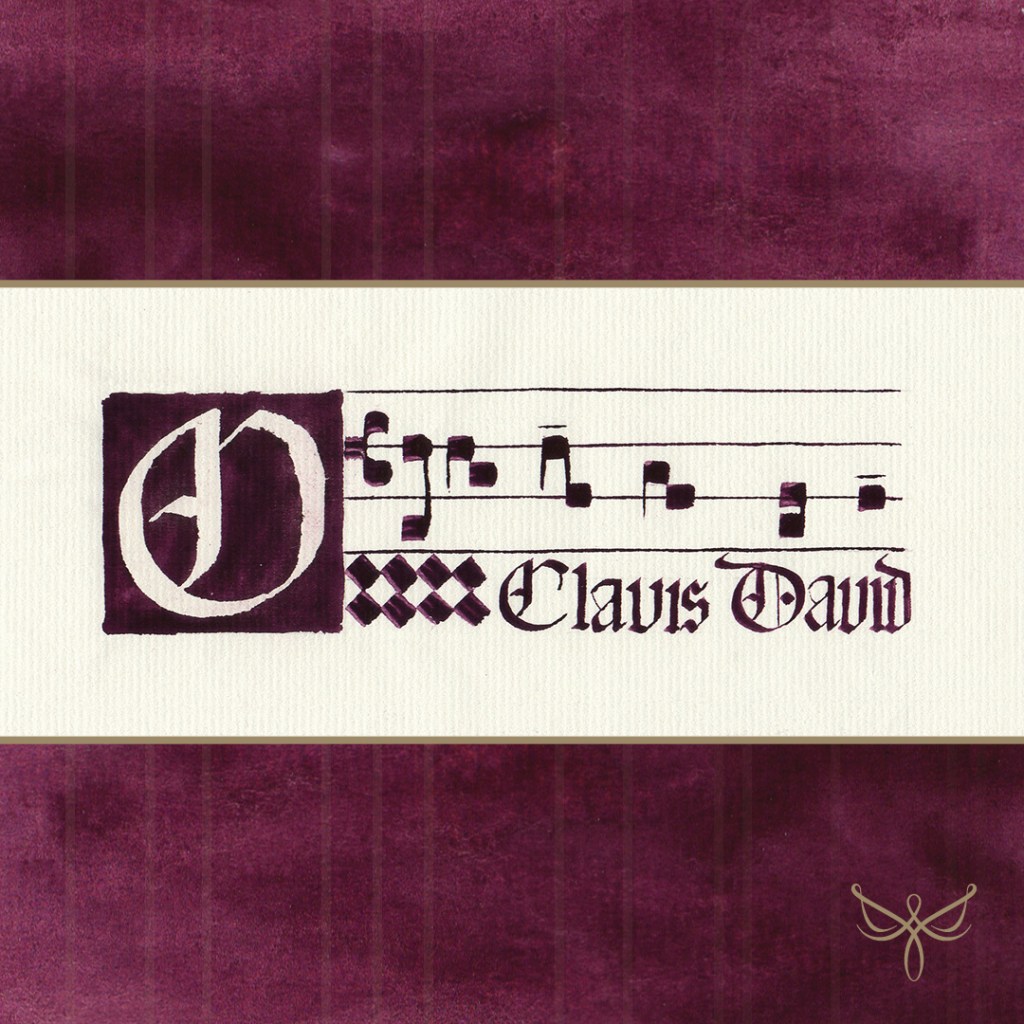
Tonight we will pray with the whole Church:
O Key of David, and regal scepter of the house of Israel; when you open no one closes, and when you close no one opens. Come, Lord, and lead forth from prison all captives who are sitting in darkness and the shadow of death. —Magnificat antiphon for December 20
Do you remember receiving keys as a rite of passage? Remember when your parent gave you keys to the house, and your boss gave you keys to your workplace? And the most significant rite was receiving the keys to your first car.
This O antiphon calls Jesus the Key of David. We see this imagery of keys in the prophet Isaiah (22:22), in the Gospel of Matthew, and the Book of Revelation (3:7).
The prophet Isaiah presents Eliakim, son of Hilkiah. Eliakim is the palace administrator. He managed the royal household and was a faithful advisor to the king, even when Jerusalem was being persecuted. The prophet reassures the king that Eliakim will be blessed.
On that day, I will summon my servant Eliakim, son of Hilkiah; I will clothe him with your robe, gird him with your sash, confer on him your authority. He shall be a father to the inhabitants of Jerusalem, and to the house of Judah. I will place the key of the House of David on his shoulder; what he opens, no one will shut, what he shuts, no one will open. -Isaiah 22:20-23
In Eliakim, we see the key of David as authority being handed down. It is the authority to open doors and to seal them at his command.
This idea of opening and closing doors reaches a new pitch in the Gospel of Matthew (16:13-20). Rooted in Peter’s confession, we witness authority being handed down.
The location where this confession takes place is worth noting: Caesarea Philippi. Caesarea Philippi is 25 miles north of Galilee at the base of Mount Hermon, which had one of the largest springs feeding the Jordan River. The God Pan was worshipped at Caesarea Philippi. Half goat and half man, depicted playing the flute. Pan evoked fear, hence the word panic. In Caesarea Philippi, Pan was the guardian of the gates of the underworld.
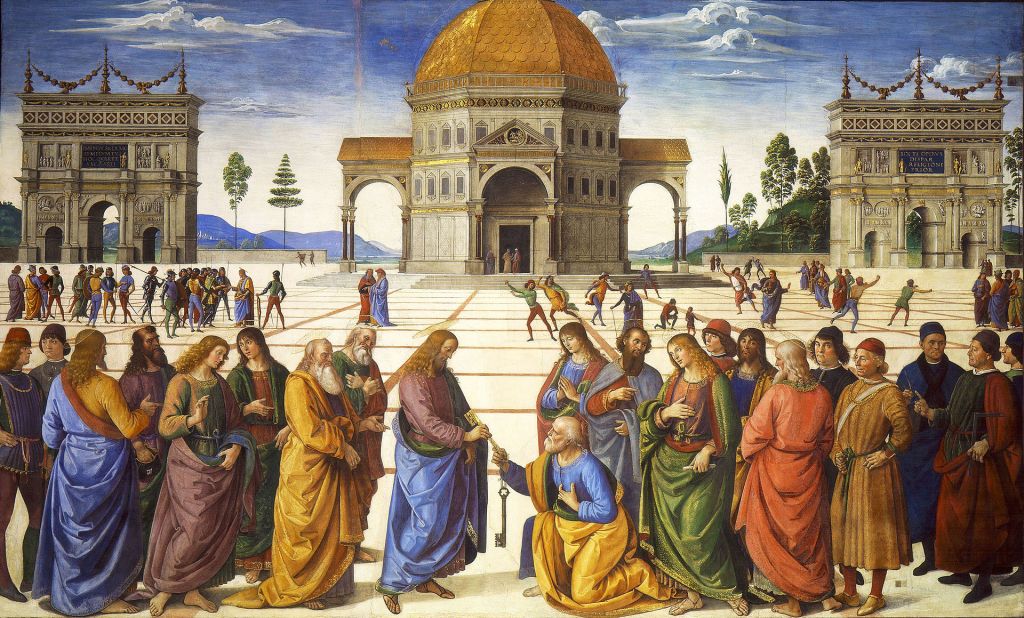
In this same place, Jesus proves that he is the true gatekeeper between life and death. In this moment and in that place, we utter with the psalmist, “Let them thank the Lord for his goodness, for the wonders he does for men: for he bursts the gates of bronze and shatters the iron bars” (Psalm 107:16).
Following Peter’s confession, our Lord tells Peter that he will be the rock and that the gates of hell will never prevail against the Church. Peter will be the primary custodian of the Lord’s Church. Jesus is always the head of his Church. Starting from Peter’s confession, Jesus begins the journey to Jerusalem. Peter will follow. Every disciple after Peter will follow Jesus to the transfiguration, to our own denial in Jerusalem, and to the cross. Every disciple will run with Peter to the empty tomb and believe in his Lord who gave him the keys.
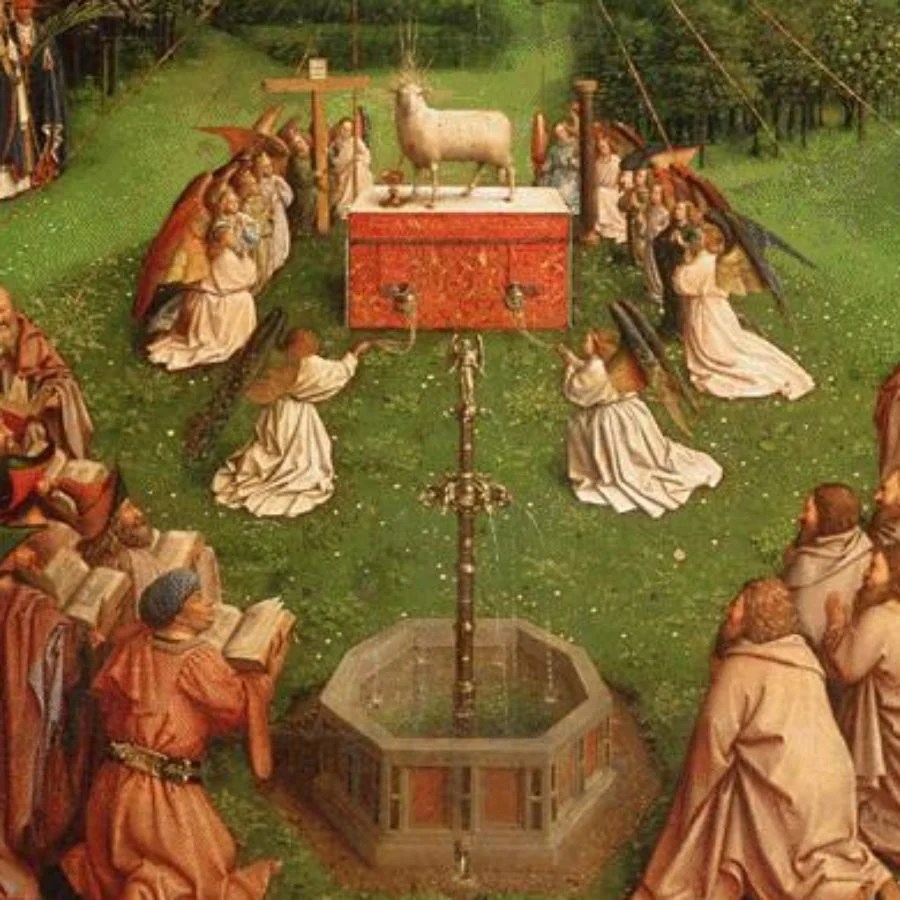
Finally, in the Book of Revelation, the angel speaks to the church in Philadelphia and tells the people that the all-holy God has the key of David, and with it will open and close the door by his own spiritual authority. John presents the image of Christ in his divine authority reigning in the new Jerusalem.
So, living in this time between the prophecies of Isaiah, the confession of Peter, and the fulfillment of Revelation, how does the Key of David apply to our own lives today?
The key is a symbol of Christ’s messianic authority; he is the Davidic king and a shepherd to his people. Psalm 23 speaks provocatively of this Good Shepherd. Some translations say, “For goodness and kindness will follow me all the days of my life” (23:6). A richer translation states: “For goodness and kindness will pursue me all the days of my life.”
God is pursuing you. In this pursuit, we groan from the depths of our being and beg God, “break down the prison walls of death for those who dwell in darkness and the shadow of death; and lead your captive people into freedom.”
This Christmas, Jesus pursues you to save you from the clutches of death. He calls you out of death, unlocks the way through the valley of tears. He shepherds you from death into his abundant life. He does this most irresistibly. He comes as a baby. Give Jesus the joy of being your savior.
Be the key Jesus uses to release those in prison, locked in the difficulty this holiday season can often bring. Be the key that breaks down isolation or loneliness for the elderly. Be the key that unlocks the healing needed with distant relatives. This is the true gift we can give ourselves this Christmas.
O key of David, unlock my heart, so that I can be a steward of your love, unlocking the most profound joy of Christmas for others.
For your meditation this day. From the monks of Saint John’s Abbey:
*** Announcement: As the Christmas season approaches, consider making a gift to Enlarge My Heart. Click here to read more about this new opportunity!
 Enlarge my heart
You are welcome to leave a reply.