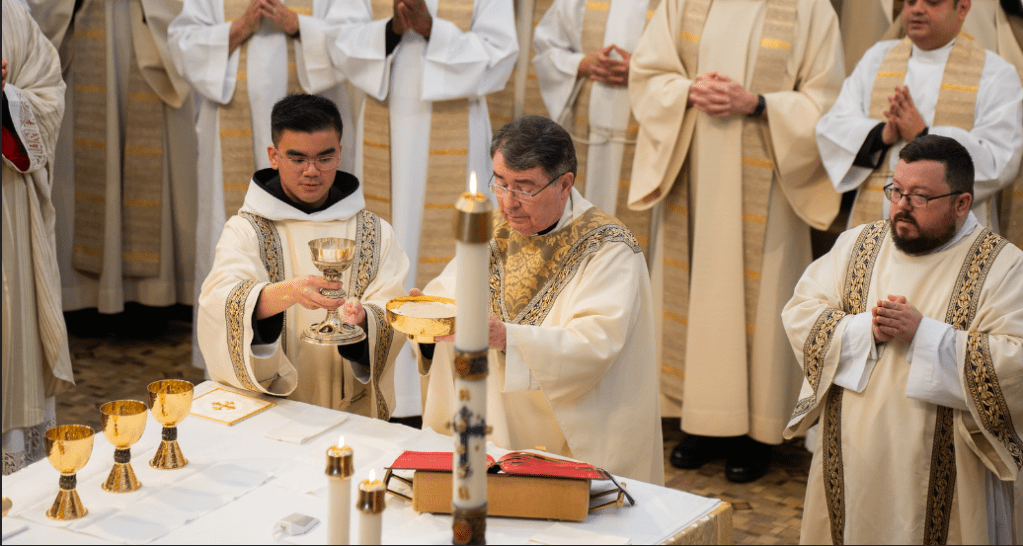
This monthly series, Mass Communication, has now come to the exploration of the Eucharistic Prayer.
This is not the big, long prayer the priest says alone. It is the prayer of the ordained priesthood and the baptized priesthood. Together, the Great Thanksgiving is offered! This four minute experience is center of Sunday worship:
Now the center and high point of the entire celebration begins, namely, the Eucharistic Prayer itself, that is, the prayer of thanksgiving and sanctification (GIRM 78).
The prayer begins with The Lord be with you. More on this exchange can be read here.
With joy and authority the priest commands the assembly: Lift up your hearts! In Latin, sursum corda. Abbot Jeremy comments on this dialogue:
… this phrase is like a shout, literally, “Hearts on high!” It is Christ the head telling his body where we are going, and we’re going there fast, so wake up and get on with it. We are going right up into heaven where Christ is seated at the right hand of the Father. All that is about to happen, happens there (What Happens at Mass 75).
To have our hearts raised on high is to be where Christ is. We meet Christ, the all-at-once glorified, risen, and crucified Lord!
This threefold dialogue concludes with a proposal, “Let us give thanks to the Lord our God.” We respond literally, “It is right and fitting.” With hearts raised, we do the most fitting thing. We give thanks. We celebrate Eucharist. The priest’s voice is now the voice of Christ, the voice of the whole assembly. Our prayer now turns to God the Father.
There are eight main elements to the Eucharistic Prayer (GIRM 79). I will comment briefly on each.
a) The thanksgiving. The priest takes our words “right and fitting” and poetically continues in the preface. Preface is not an introduction as we commonly understand it. It comes from the Latin prae fari which translates to do in front of or proclaim in the presence of. It is a proclamation of the thanksgiving. We are giving thanks to the Father. The expression Through Christ our Lord is uttered to articulate the Son’s great deed that won our salvation. The preface concludes thrusting us into the presence of all the angels to utter an acclamation.
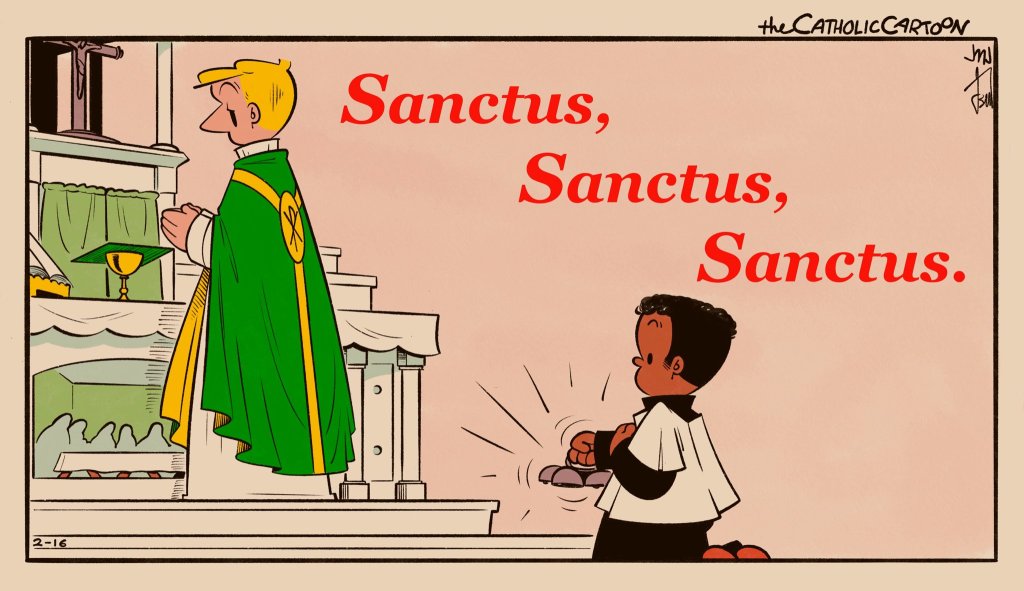
b) The acclamation. We take the words from Isaiah: holy, holy, holy. This song is blended with all the angels in their eternal worship to God. This song “is pronounced by all the people with the Priest” (GIRM 79b). The singing teaches us “that we are standing before the very throne of God in heaven” (What Happens at Mass 81). We are in the presence of the Lamb, slain and risen!
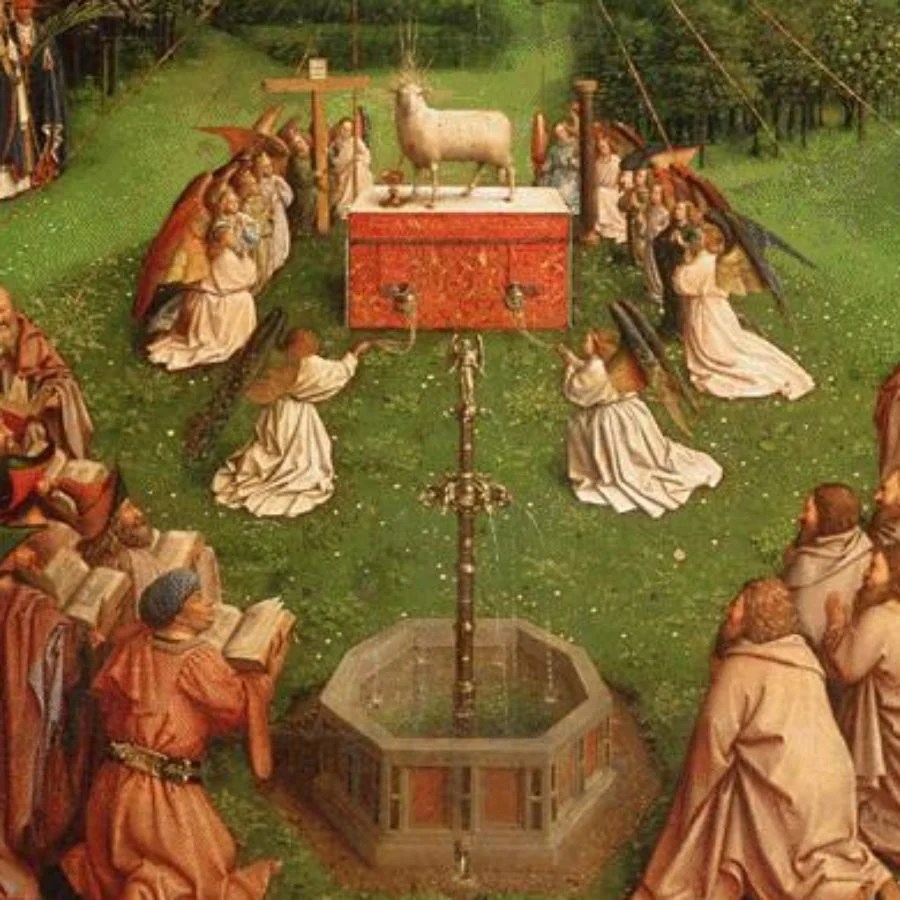
c) The epiclesis. Epiclesis is a Greek word that means calling down upon. In the strictest liturgical sense, this involves invoking the Father. Epiclesis is a deep plea of the whole Church asking that the Father sends the Spirit.
At this moment, we are immersed in the mystery of the Trinitarian life and pattern. The Father sends the Son. The Spirit gives flesh in the womb of the Blessed Virgin Mary. The Spirit raises Jesus from the dead. The Spirit transforms the gifts of the Church into the same Jesus. We are caught up in Trinitarian love. At this Last Supper, the whole history of Israel reaches its peak. Israel becomes fully receptive to the new and eternal covenant. And it all takes place on the night he was betrayed.
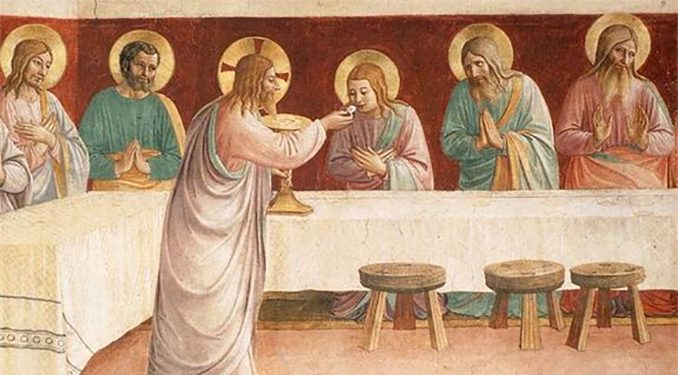
d) The institution narrative and Consecration. At this moment, the priest stands as Christ at his altar. He speaks the words of Christ over the bread and wine with the authority of Christ. Words change created things into spiritual realities. The food and drink of this meal become the language of the Exodus reaching its fullest meaning in Christ.
e) The anamnesis. Anamnesis is Greek for memorial. In the strict liturgical sense, it is the part of the Eucharistic Prayer that follows the Mystery of Faith. We take the Lord’s command: Do this in memory of me. We remember, not in the weak sense of recalling, but by celebrating faithfully what has been handed down. The events of the past are made present now. We enter into the hour of the Lord’s glory.
f) The oblation. As we offer the unblemished sacrifice of Christ, we offer ourselves. We call down the Holy Spirit upon the community. We beg the Spirit to make us into the Body of Christ. In all our diversity, make us one. Make us the hands, feet, and heart of Christ.
g) The intercessions. At this moment of the Eucharistic Prayer, we express our communion with the whole Church in heaven and earth. We pray for all her members in Christ living and dead.
h) The concluding doxology. In these four minutes, our whole lives have been brought to the altar. Now, they have been raised and transformed in Christ. Once bread, now his very presence. All creation is brought before God the Father with the voice and hands of the priest. He utters that through, with, and in Christ, God is glorified now and forever. To which we give our ascent – AMEN.
To summarize these thoughts, I look to Pope Francis. In his Apostolic Letter, Desiderio desideravi, he notes that staging the Eucharist would be meaningless. It would make no sense in the life of the early Church. The disciples would not have staged a fictional story especially before the eyes of the Blessed Mother. The celebration of liturgy and the life of faith “is either an encounter with Him alive, or it does not exist” (10).
 Enlarge my heart
You are welcome to leave a reply.