
Today is Trinity Sunday. It is the most difficult day of the year to preach on the essence of God. God is complete mystery and if we think our minds have encapsulated the immensity of God, then we have missed the mark.
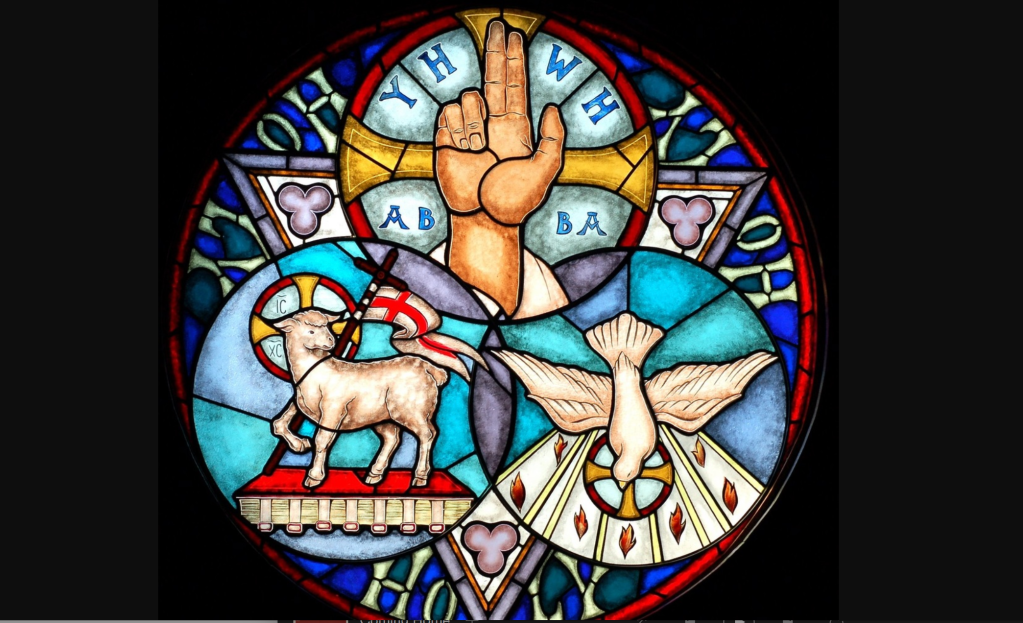
Instead of trying to explain the doctrine of the Trinity, I will reflect on the life of a person who might have caught God’s spirit. We become believers in God through the genuine witness of others. God is revealed in every person and in today’s case, God is revealed in the brokenhearted who has painted his broken heart onto canvas.
In my lived experience, the path into the interiority of any human person is through reading books, contemplating art, and deep listening to music. I’ll try to interweave all these avenues in my shared thoughts.
Jesus calms the storm with us
In 1990, Rembrandt’s masterpiece The Storm on the Sea of Galilee (1606-1609) was stolen from the Isabella Stewart Garden Museum. There is an empty frame on the wall where the masterpiece once hung, awaiting its return. Thirty-five years … and still waiting.
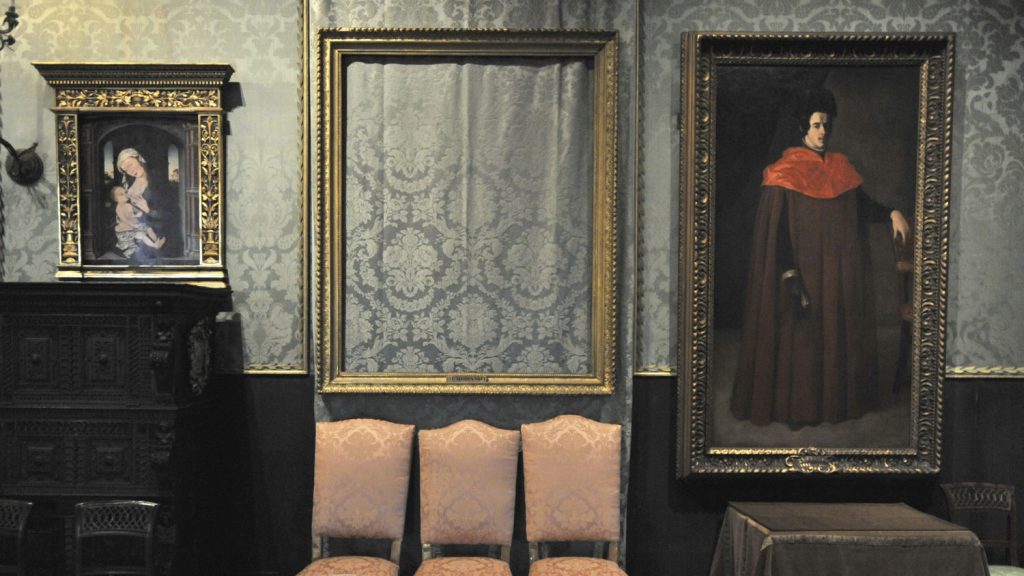
Who was Isabella Stewart?
Isabella Stewart Gardner (1840-1924) was the first great American art collector. Heartbroken from the loss of her two year old son in 1865, she and her husband, Jack, traveled the world collecting art.
In 1890, after twenty-five years of exploring the world, they ascertained the works of Botticelli, Titian, Raphael, Manet, Degas, Vermeer, and Rembrandt. In her desire to share this permanent treasure with the world, she and her husband purchased a plot in Boston’s Fenway neighborhood.
In 1898, Isabella lost her husband in death. Thrusted into her grief, she used art to navigate through her storm. She built her museum to house this impressive collection for the world to enjoy! She created an Italian Renaissance palazzo with great halls and a central grand courtyard, reminiscent of Venice where she and Jack frequented. The building was completed in 1902.
By the time of her death in 1924, Isabella had an impressive 2500 tapestries, manuscripts, rare books, sculptures, pieces of furniture, and works spanning the masters noted above. Gardner captured the beauty of life through art, God was her divine artisan.
In her will, she stated that nothing was to be changed. If her wishes were broken, everything was to be sold to the Louvre in Paris and the profits given to Harvard University.
Gardner appreciated the arts and masters like Rembrandt whose calamitous life we turn our attention.
Rembrandt’s Personal Storm
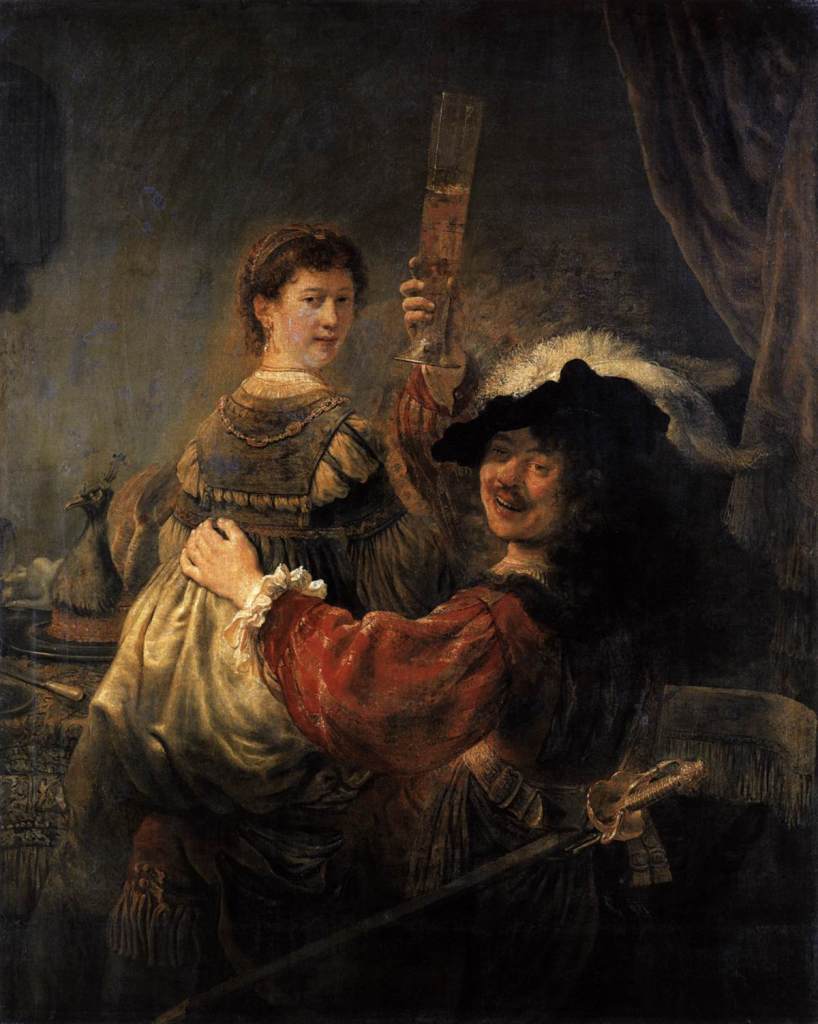
While Rembrandt came from a life of privilege, in the final analysis, his was a tragic life chapter after chapter.
He fell in love with Saskia who is portrayed in his 1635 masterpiece. They lost their first son, Rumbartus, and two daughters they named Cornelia. In the midst of these deaths, Rembrandt lost his mother. Titus was their only son who grew into adulthood.
Rembrandt lost Saskia in death. Throughout their marriage, Saskia was the subject of many works. After her death, Rembrandt painted a final portrait of his beloved.

In the second half of his life, Rembrandt met Geertj Dircx. She was the nanny of his son, Titus. He made advances with her, but never intended to marry Geertj. She took Rembrandt to court and he paid alimony by selling Sakia’s jewlery. This was a tragic relationship. Petty court cases and his flawed character put Geertj in jail for over ten years. Geertj died destitute.
He later met Hendrickje Stoffels who bore Rembrandt a son who died and later a daughter named Cornelia. They lived as common-law husband and wife. She was with Rembrandt during his bouts with Geertj.
In the midst of romances, Rembrandt drowned in debt. He sold off much of his art collection and personal property. To save what he had left, he willed everything to his teenage son Titus.
He sold his property in Amsterdam and rented a simple place in a poorer part of town. He lost Hendrickje to the Black Plague. Titus, who cared for Rembrandt, married and had a child and succumbed to the same plague shortly after.
In Rembrandt’s poverty, he buried his son in a borrowed grave. He became the Godfather of his granddaughter, Titia. Titus’ wife died shortly after, leaving Rembrandt alone.
Rembrandt, drowned in grief, died on October 4, 1669. He was sixty-three. He owned very little: a few paintings, a bed with blankets, some clothes, few handkerchiefs, caps, and a Bible.
Rembrandt was also buried in a rented grave. The location is unknown.
A Homecoming for Rembrandt
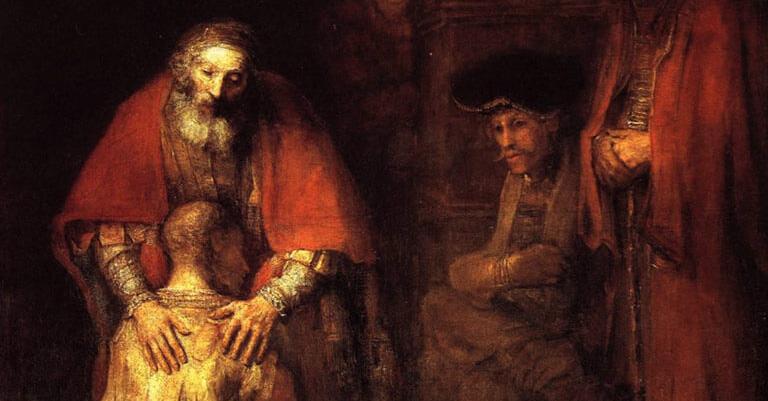
The Return of the Prodigal Son (1669) is one of Rembrandt’s final pieces. Some say that the younger son, bald and poor, who places his ears against the father’s chest, is a self portrait of the master himself.
Rembrandt had a difficult life, painted onto canvas, so that we too can contemplate our own interior life. We see this in one particular painting: the storm.
What does the storm teach us?
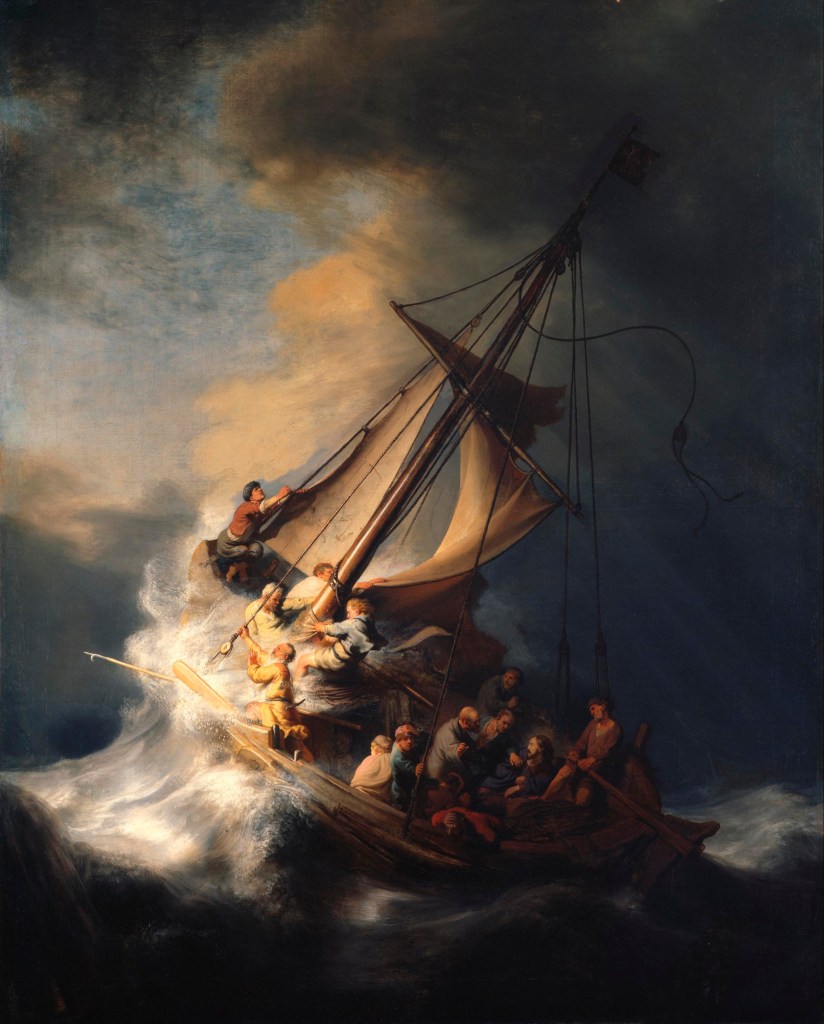
A careful observation will note that Jesus is in the darkest part of the portrait. A disciple is kneeling before him in prayer. One gives his back to the viewer as if he was resigned to this fate. One has his head hanging over the boat. Another is immensely terrified standing above Jesus. There are fourteen characters in this masterpiece. Who is the extra character with Jesus and the twelve disciples?
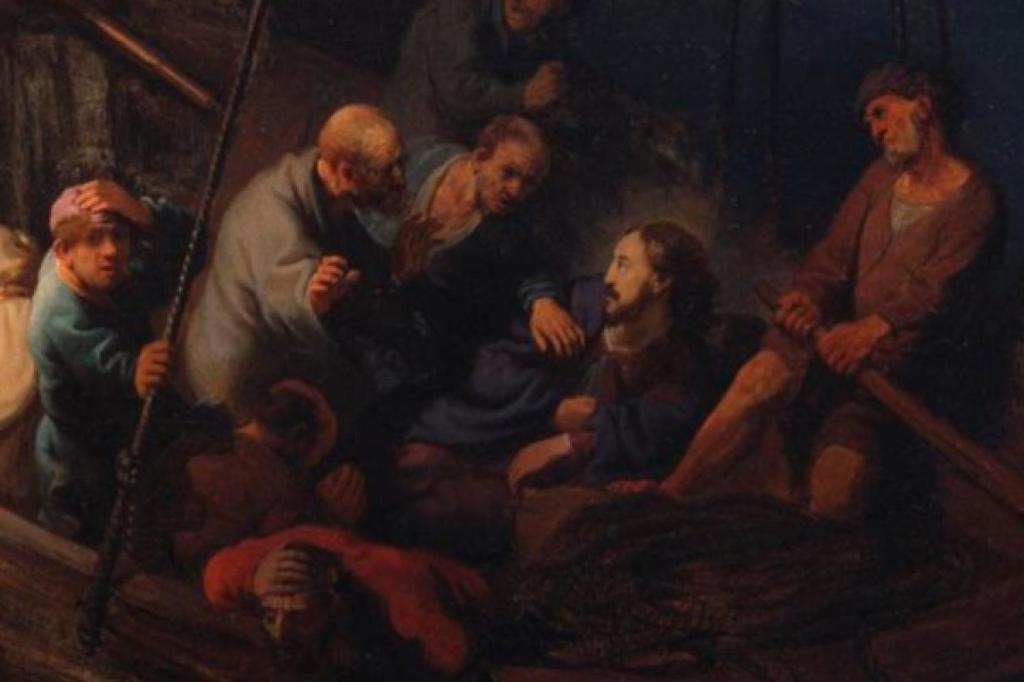
Some say the character looking directly at the viewer is a self-portrait of Rembrandt. The gaze on which the fourteenth person in the Storm of Galilee lures us into the moment. Are we in the Gospel story or is Jesus in our story?
Perhaps Rembrandt is reminding us that Jesus is always close, no matter the squall, character flaw, or upheaval of life. At the center of commotion, grief, and distress, we will cry out to Jesus, he will hear us and calm the storm within. Jesus will hold us like the Father held the Prodigal Son. At that moment, we will place our ears against the Father’s chest … and listen … listen to the heart that has loved us from the beginning. We will feel the divine love, sometimes known as the Holy Spirit, evade our brokenness, calm our storm, and bring us to calmer waters.
As I contemplate this masterpiece, I am reminded that no catastrophe is bigger than God. God is in control of our lives. We are invited to trust, even when it seems that God is sleeping in the storm. I turn to the psalms which share my sentiments:
The waters saw you, O God,
the waters saw you and trembled;
the depths were moved with terror.
The clouds poured down rain,
the skies sent for their voice;
your arrows flashed to and fro.
Your thunder rolled around the sky,
your flashes lighted up the world.
The earth was moved and trembled
when your way led through the sea,
your path through the mighty waters,
and no one saw your footprints (77:16-19).
We may not know everything about the immensity of God. One thing we do know, God is in our storm, he will calm the storm within us.
 Enlarge my heart
You are welcome to leave a reply.