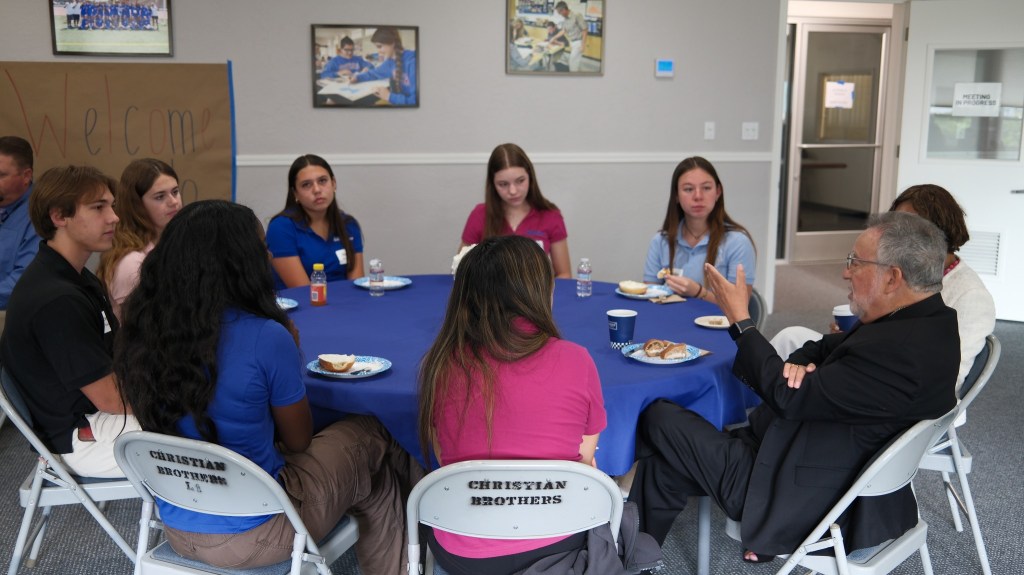
The picture above is a photo of Bishop Soto’s visit to our high school, enjoying breakfast with our students.
Each month, I explore an aspect of our liturgy experience. This series is called Mass Communication. Today, I look at Gospel, homily, creed, and Universal Prayers.
Jesus Ate With Sinners: the Gospels
After the Second Reading there is silence and suddenly the assembly stands. Everyone sings the one word that resonates within us announcing the Resurrection of the Lord: Alleluia! We all stand for at this very moment with torches and incense, we now meet the Risen One.
All accounts of the Gospel find at its center the Paschal Mystery of Christ. It is the Risen Lord who speaks to the people he has gathered in that moment in time.
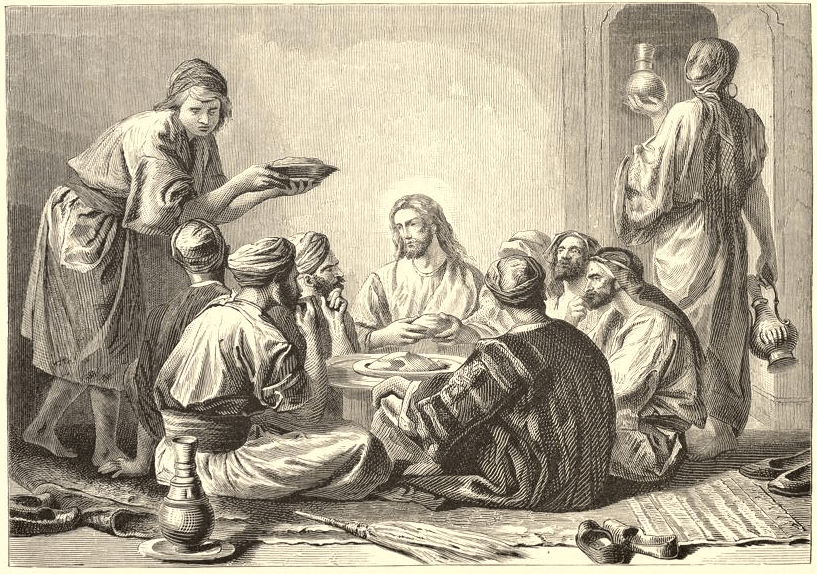
Jesus reveals the Father not through his words, but through his Death and Resurrection. The Holy Spirit is with the assembly. He assures us that the words of Jesus reach the depths of our souls. The Holy Spirit plants within us the Lord’s Death and Resurrection. This allows us to utter: Praise to you, Lord Jesus Christ.
The Homily
Jesus won over the hearts of his people by the way he spoke to them. They were amazed by his teaching and followed him. Jesus continues to speak to us in the homily.
The homily is not just a nice speech. The Homiletic Directory says something interesting:
Because the homily is an integral part of the liturgy, it is not only an instruction, it is also an act of worship.
The homily is always a proclamation of the Paschal Mystery! It is a genre that helps listeners of all ages. It helps listeners of every education level know that the scriptures are fulfilled in their hearing. The homily moves the listener’s heart to active celebration of the Eucharist. The homily sends the listener to be witnesses of the Lord’s Resurrection.
Along the lines of the homily being an act of worship, Pope Francis is encouraging in this idea. At the center of the homily is Christ. He says:
that preaching should guide the assembly, and the preacher, to a life-changing communion with Christ in the Eucharist. This means that the words of the preacher must be measured, so that the Lord, more than his minister, will be the centre of attention (138).
Pope Francis teaches that the homily is the “supreme moment of dialogue” between God and his people. It is a moment that moves us to communion. This is the privileged duty of the pastor must know the smell of his sheep:
The preacher must know the heart of his community, in order to realize where its desire for God is alive and ardent, as well as where that dialogue, once loving, has been thwarted and is now barren (137).
Through the action of the Holy Spirit, the Body of Christ is always being evangelized. This principle is a reminder of the familial connection in preaching. The Holy Father eloquently states:
It reminds us that the Church is a mother, and that she preaches in the same way that a mother speaks to her child, knowing that the child trusts that what she is teaching is for his or her benefit, for children know that they are loved. Moreover, a good mother can recognize everything that God is bringing about in her children, she listens to their concerns and learns from them. The spirit of love which reigns in a family guides both mother and child in their conversations; therein they teach and learn, experience correction and grow in appreciation of what is good. Something similar happens in a homily.
The homily is an act of worship that has Christ at its center. It is a genre that evokes the Paschal Mystery and moves hearts to the Eucharistic center. The homily has a familial and ecclesial dimension that continually evangelizes the Body of Christ. The ordained preach to the faithful. They give “verifiable assurance” of the apostolic faith handed down to our day (What Happens at Mass 52).
The Creed
After the Word has been broken, the assembly stands to utter the formula of the Church’s faith. The Creed is a summary of how the Church reads scripture and the profession of all we believe.
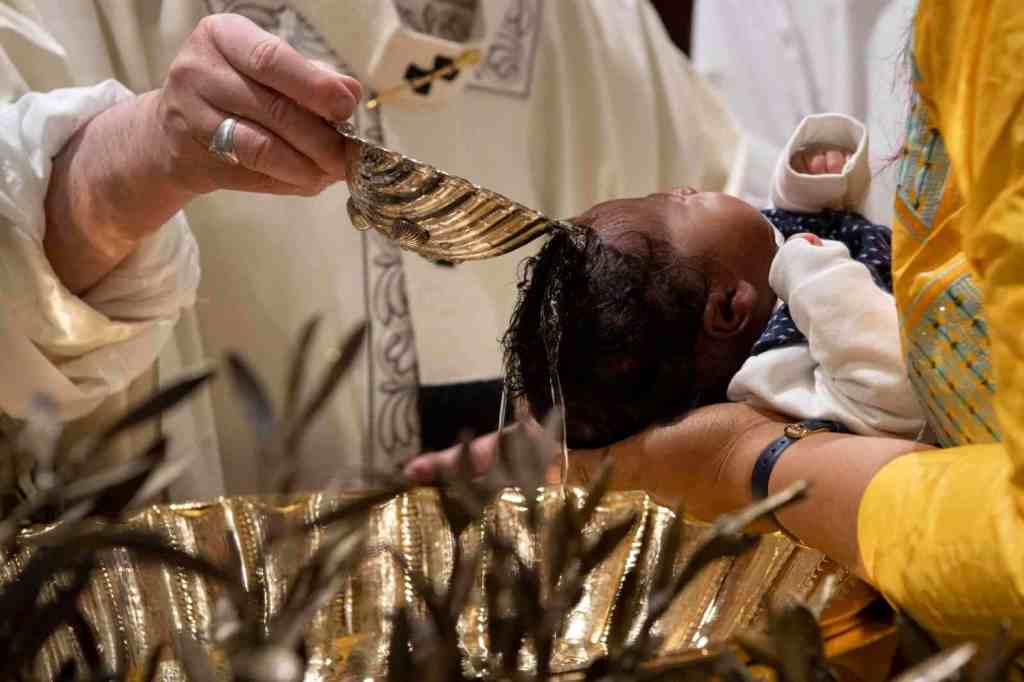
The Creed has its origins in the Baptismal Liturgy. As we profess it each Sunday, we renew the baptism given to us as infants. We utter who God is and our relationship with him in the world.
The Universal Prayeer
After all that has been experienced thus far, the People of God remain standing. They respond to God’s voice that has been fulfilled in their hearing. They exercise their baptismal priesthood and offer prayers for the whole world.
These intentions usually focus on the needs of the Church and public authority. They also consider the salvation of the whole world. Additionally, they are for those burdened by any difficulty and for the local community.
These intentions have a particular character. They should be sober, composed with wise liberty and brief words that is expressive to the community. The assembly responds with a common acclamation or by praying in silence.
In this post, we have explored the Gospels. We have also examined the breaking open of scripture, our profession, and the universal petitions of God’s people. The Liturgy of the Word is not done. Next month we will reach its conclusion with the Preparation of Gifts.
 Enlarge my heart
You are welcome to leave a reply.