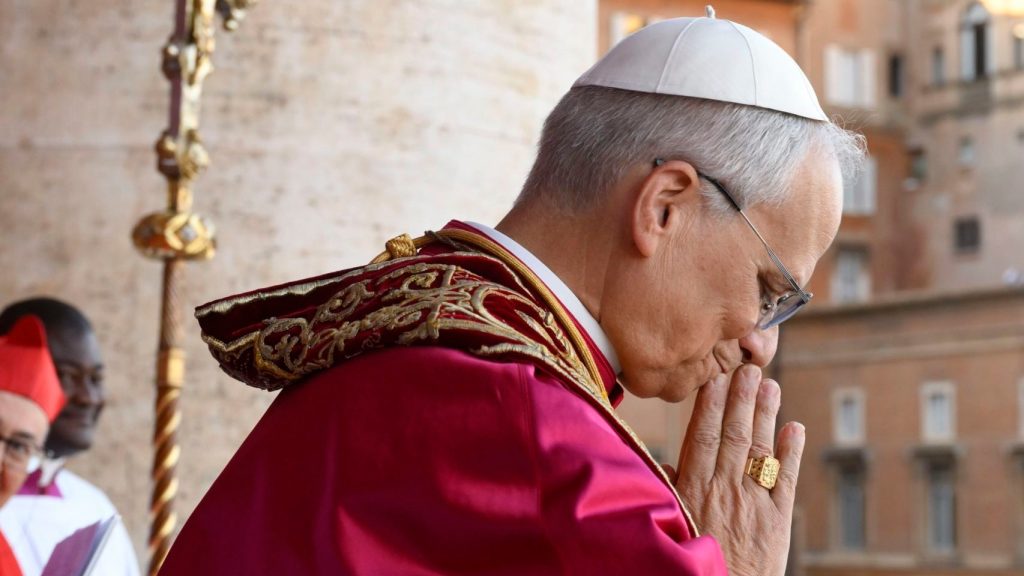
As we begin this new chapter in the life of the Church, I reflect on the keys and communion.
Keys. When Jesus gives the keys to Peter in Matthew’s account (16:19), he is evoking Isaiah 22:15-25. In this passage the prime minister’s office is handed down to successors. This resonated with Matthew’s Jewish audience. The office of Peter is meant to be handed down and endure as long as the kingdom.
This handing down of the office has evolved. Beginning with Peter, the pope was chosen by their immediate successor. As the Church grew, others appointed Peter’s successor like emperors and political leaders. In 1059, Pope Nicholas II made cardinals the sole electors for the Bishop of Rome. By 1274, Gregory X was elected after a few years of discernment. He promulgated the conclave process. This process with its most updated decrees has been the process in which the Church receives her key holder of the kingdom.
Peter was appointed chief teacher of the Church. Matthew is the only one who uses the word ἐκκλησία or ekklesia, the liturgical assembly. Christ does not build a building or temple on rock. Christ builds a people dear to his heart on rock, on firm foundation! This is a community of believers who worship the Father in spirit and truth (John 4:24). At the helm of this body is Peter, the steward of Christ’s royal authority.
Binding and loosing in the visible and invisible worlds (Matthew 16:19) is a metaphor that signifies the rabbinic teaching authority and forgiveness of sins, excluding and including members into the ekklesia. Heaven governs earth through the office of Peter.
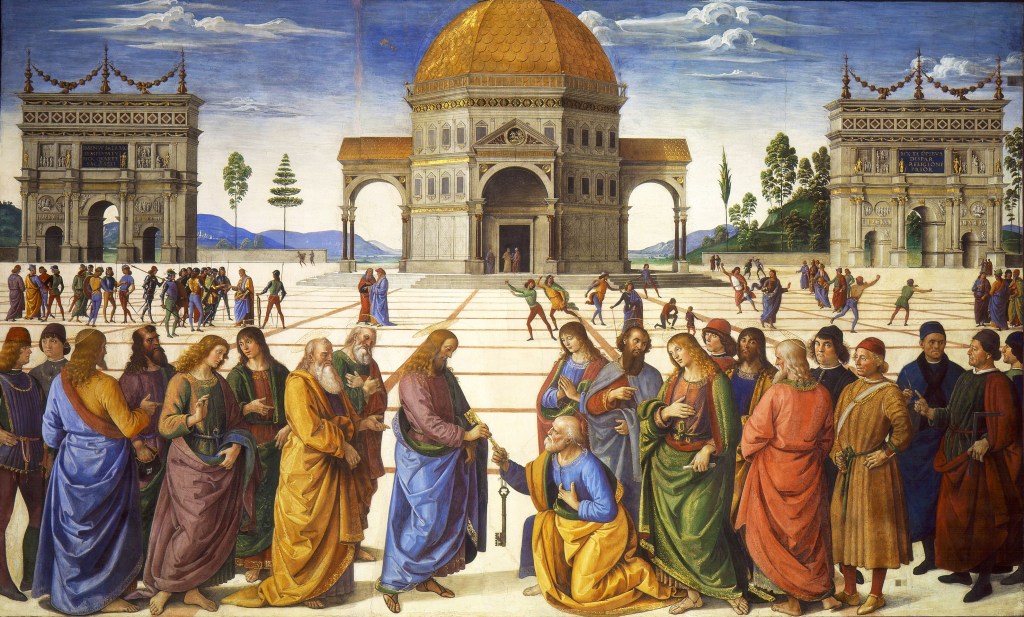
Perugino’s fresco is a masterpiece worth reflecting on in this moment. It is located on the north wall of the Sistine Chapel once you enter the through the main doors. It was commissioned by Pope Sixtus IV who guided the barque of Peter from 1471-1484 and is also the one to whom the chapel is dedicated. This fresco belongs to a collection depicting the life of Christ on the north wall while the south wall depicts scenes from the Old Testament life of Moses. The south wall sees its fulfillment in the north wall.
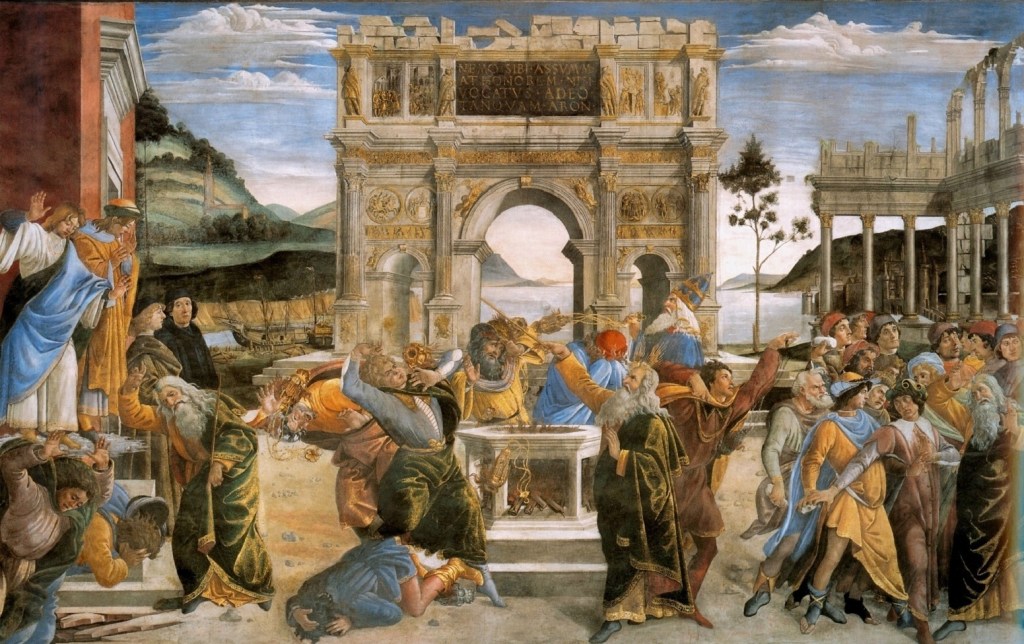
The Punishment of the Sons of Korah is the Old Testament story to Perugino’s fresco. It comes from Numbers 16. Enemies are punished by God and swallowed up by the floor. The floor is firm in Perugino’s fresco. No matter what happens, the gates of hell will never prevail against the Church. That is the message of these two frescos.
This masterpiece is an example of Early Renaissance art. You gaze at this work and the idea of flatness is reduced. You see everything in a believable three dimensions. The arches that bookend the piece is a tribute to Constantine, the central baptistry is a tribute to the Church’s mission.
White smoke and bells signal the handing of keys and the promise fulfilled that Christ remains in his Church. Christ promised the kingdom and gave us the Church. Here we witness the governor appointed by Christ who becomes the visible sign of our communion.
Communion. One must be patient and give time to allow the new Holy Father to know the flock. We must listen carefully to what he officially says. The primary exercise of Peter’s successor is not to win over liberals or conservatives. Nor is it about bringing a geopolitical issue to the top of the Pope’s agenda. I think the primary hope of the one to succeed Peter will be that this man, in all his weakness and by the gift of grace, will be able to announce the Resurrection of Christ in a compelling way to the world. This is no easy task and Michelangelo Buonarroti reminds us of this.
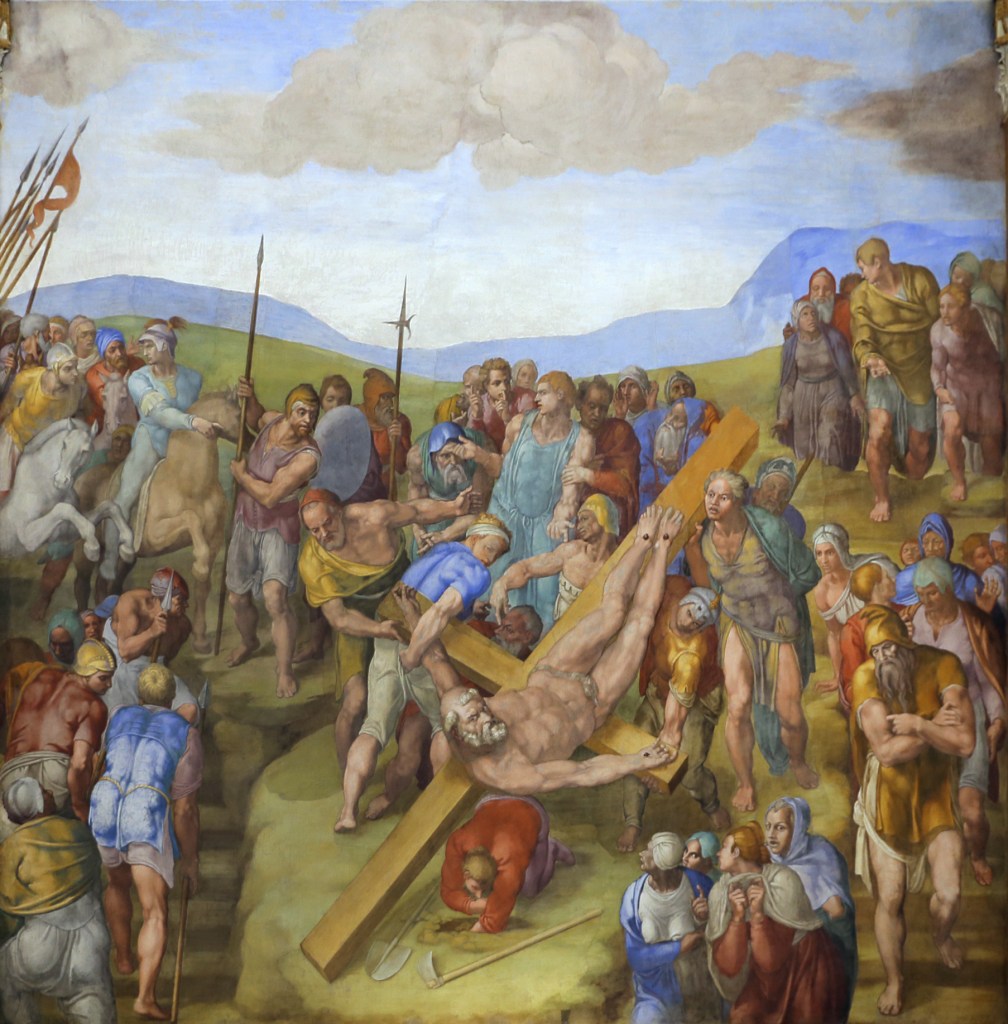
The Crucifixion of Saint Peter is located inside the Pauline Chapel, once the private chapel of the Bishop of Rome. Now it is the place where cardinals gather before their procession to Conclave. Here, Peter stares with resolve at his future successor to remind him of the ultimate papal agenda: witness to Christ no matter the situations, dangers, or drama within the Church. He must witness the Gospel in a compelling way to the world in every season.
May the new pope bring us into communion with God by awakening our hearts to the Good News that Christ is risen. He will do this by bringing the diverse international group of cardinals into fraternal communion. He will do this by bringing the world to contemplate the face of Christ in the poor. This is the vision of how we shall be ekklesia.
Here’s my take away. No matter who the pope is, I am still a Catholic and will respect and love the Roman Pontiff with all my affection. What this election solidifies is that Jesus keeps his promise. Someone has the keys and Christ builds this community of believers on the rock. This election is a reminder that I am to live my own baptismal calling as a disciple of Christ.

 Enlarge my heart
You are welcome to leave a reply.