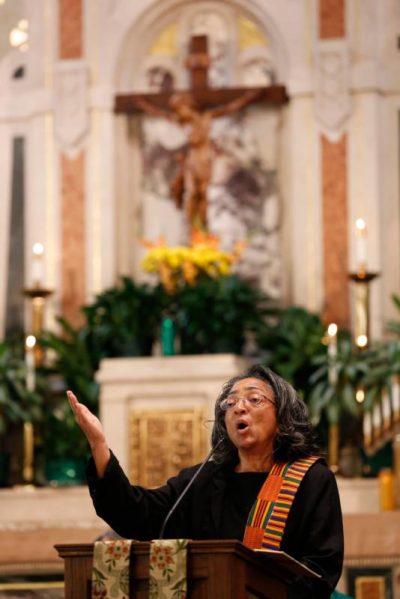
Each month, I explore an aspect of our liturgy experience. This series is called Mass Communication. Today, I look at the Responsorial Psalm.
Last month, I explored ideas around the First Reading, commonly taken from the Old Testament. Where this differs is the Easter Season. During Paschal time, the First Reading is taken from the Acts of the Apostles. These readings announce the post Resurrection events of the Church. It is a declaration of new life which is fitting for the Paschal season.
After the First Reading, there is silence. Silence is observed for different reasons throughout the Mass. After the proclamation of the First Reading, there is silence for “all meditate briefly on what they have heard” (General Instructions of the Roman Missal 45).
Silence is not a personal moment for you to be with your thoughts. Liturgical silence is more profound. Pope Francis says silence “a symbol of the presence and action of the Holy Spirit who animates the entire action of the celebration” (52). The Holy Spirit is forming our hearts. The Spirit is preparing us for what has happened and what will happen next.
During this silence, I am engaged with how this First Reading impacts my life. How do its words move me to deeper conversion? I also engage the fact that all are experiencing the proclamation as well. Collectively we consider the call to follow Christ more closely. Abbot Jeremy tells us, “This is primarily the silence of awe and adoration in the presence of God who has spoken to us” (What Happens at Mass 41). The Abbot points to the Heavenly Liturgy referenced in the Book of Revelation:
When the Lamb broke open the seventh seal, there was silence in the heaven for about thirty minutes” (Revelation 8:1).
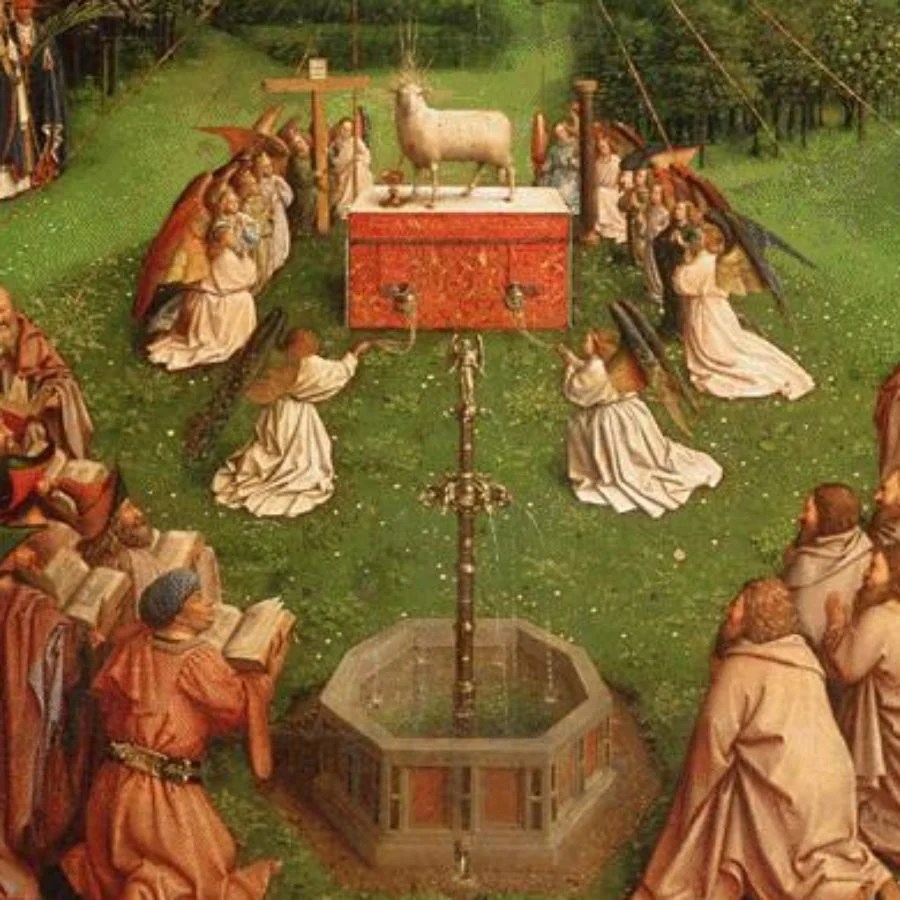
After the silence, we look to the words of Christ. These words are Israel’s hymnbook. The words of the psalms were uttered on the lips of Jesus. We, as the gathered assembly, respond to the Father who has spoken to us. Jesus’ words fulfilled in the psalms make our response adequate.
It is fitting that we use Jesus’ words as our response to the Father. Jesus lived the history of Israel “and prayed to his Father all the while, in his own name and in the name of his nation, he was absorbing into himself, assuming into himself, the entire history of the nation, and so the world” (What Happens at Mass 42-43).
In the First Reading, the Father speaks to us. In the Responsorial Psalm, the Church responds. This dynamic shift is expressed as one person proclaims the First Reading and the psalmist sings the psalms.
The antiphonal style, singing back and forth, psalmist and assembly, choir and assembly, “articulates in a lovely way the coordination of the voice of the Church with the voice of Christ” (What Happens at Mass 43). The voice of the Risen One blends into our voices which utter one praise to the Father.
With the same sentiments of the one who proclaims the First Reading, it is a privilege to sing the psalm as a cantor. In the cantor “Christ borrows the voice and talent of one of his own members and uses it as the voice of prayer in the midst of the Church” (What Happens at Mass 44).
Friends, to go deeper on these theological realities of the Mass, please watch the video below. Abbot Jeremy Driscoll, is interviewed by the Most Reverend Frank Caggiano in a video podcast entitled Let Me Be Frank. Enjoy!
 Enlarge my heart
You are welcome to leave a reply.