
I think about hope with a Christian conviction. Pope Benedict XXI wrote Spe Salvi in the third year of his pontificate. He starts by stating that as Christians, we can easily forget that hope roots us in faith and redemption. As a matter of fact the terms faith, redemption, and hope can be interchangeable in the tradition.
We see this interchangeable example of faith and hope in the scriptures. In the Letter of the Hebrews, the fullness of faith is linked to the confession of hope without wavering (10:22-23). Hope allows us to testify to the faith with us (1 Peter 3:15).
Hope is the distinguishing mark of Christians (4). Hope sustains the gift of our salvation. We can face tomorrow with all its uncertainties if we cling to hope. We have a future and life will not be empty.
Pope Benedict XVI talks about the Christian message as not only informative but performative. The gospel is not only a communication of ideas. The gospel stirs our hearts and its message changes our lives, moves us to mission.
The Holy Father gives the witness of Saint Josephine Bakhita. Bakhita means Fortunate One. She is a 19th century saint from Darfur in Sudan.
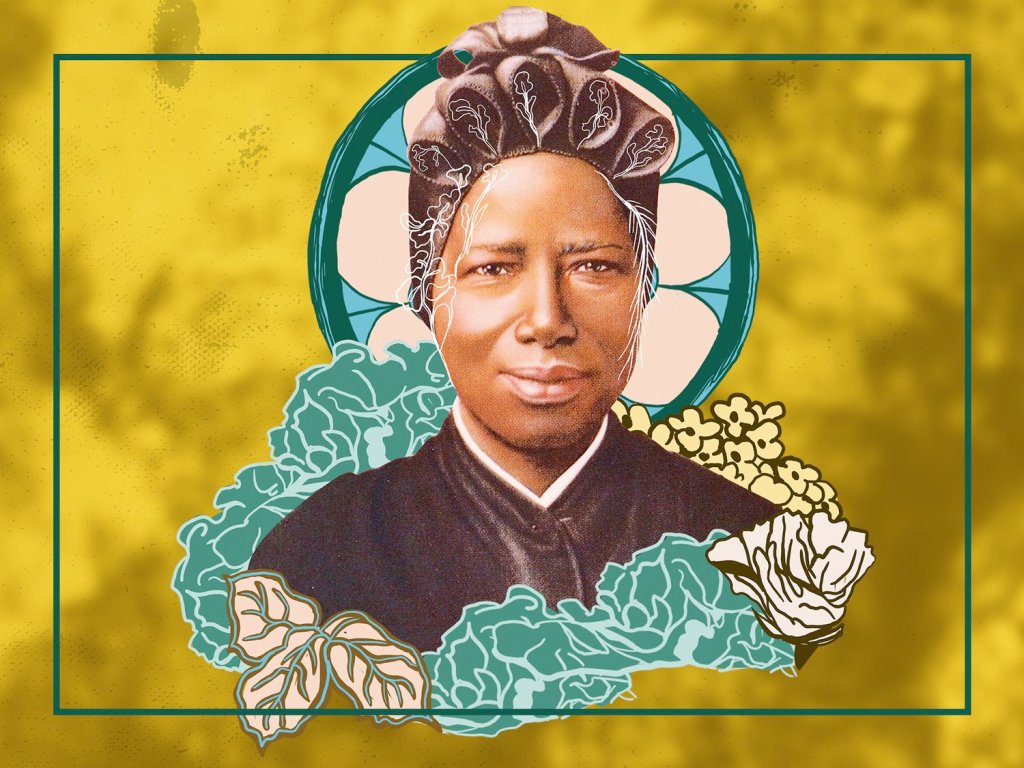
She was kidnapped at the age of seven. She was sold into slavery seven times. She was a slave who bore 144 scars throughout her life. Many slave owners broke her body, but did not mutilate her spirit.
Josephine was baptized in January 1890 and joined the Congregation of the Canossian Sisters in 1896. While she new terrible masters of her life, she met her paron. Paron is the name she gives to Jesus her loving master.
Her hope was rooted in Christ who suffered like her. Her hope rooted her in the fact that she is loved. She is a daughter of Christ.
In this Jubilee Year, pause and recognize the hope within you. We are pilgrims on a journey together to God. We have hope within us which helps us recognize that we are loved by God.
 Enlarge my heart
You are welcome to leave a reply.