I have been on a hiatus on the Mass Communication series. Last time this series appeared was in December. I spoke about the essential of listening to the proclamation of the Word. You can read that post here. Today, we explore the proclamation of the Old Testament. It’s more than just story telling time!
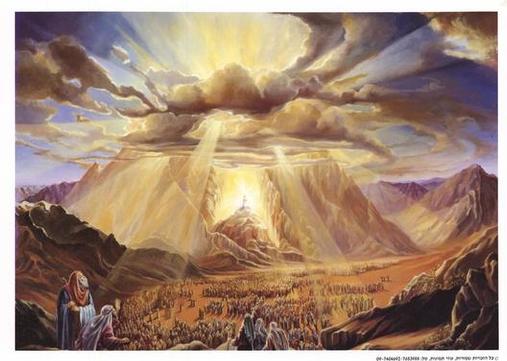
The First Reading we have in the Liturgy of the Word is from the Old Testament. The Old Testament is a vast collection of theological traditions that have been collected over a thousand years. It is filled with stories of many characters who enter covenant with God. With those who hear and read with faith, one senses the center of the whole Old Testament. The center is the Exodus.

All events in the Old Testament either look to the Exodus event or recall it. Every generation considered the great deed of God in the Exodus event. They understood their relationship with God through those lenses.
To recall the Exodus here is a recording of the Exodus 15 attributed to Moses and Miriam. It was sung after “Israel saw the great work which the Lord did against the Egyptians, and the people feared the Lord; and they believed in the Lord and in his servant Moses” (Exodus 14:31).
Jesus, the faithful Jew from Nazareth, observed and celebrated the Exodus in his own life. The Old Testament is deeply part of who he is. All these themes of creation, temple, sin, covenant, Abraham, and Moses reference the Christ.
In the proclamation of the Old Testament, the Christian community gathers and hears these stories in a different pitch. We hear these stories in light of the Risen Christ. All these stories foreshadow him.
At this point, do we understand this pivotal moment in hearing a reading from scripture as story telling? It is more than just someone getting up on the microphone and telling a story.
The proclamation penetrates by listening to the story that is deeply rooted in them as a community of faith. Our minds and hearts enter the pattern of suffering and glory. In active listening, we search for the pattern of our lives. We see how our patterns have been shaped by the biblical patterns of God’s people. We come to understand our personal existence.
Saint Ephrem, the deacon, spoke about the Word of God and how it moves us all in a unique way:
Lord, who can comprehend even one of your words? We lose more of it than we grasp, like those who drink from a living spring. For God’s word offers different facets according to the capacity of the listener, and the Lord has portrayed his message in many colors, so that whoever gazes upon it can see in it what suits him. Within it he has buried manifold treasures, so that each of us might grow rich in seeking them out.
To proclaim the Word of God at liturgy is one of the great duties and privileges of our baptism! We announce the loving plan of God to the assembly. At the same time, they hear our personal journey as disciples of Jesus. They hear it in the tone of our conviction, the capacity to proclaim with clarity. The event is made present in our hearing and we respond collectively, “Thanks be to God!”
 Enlarge my heart
You are welcome to leave a reply.