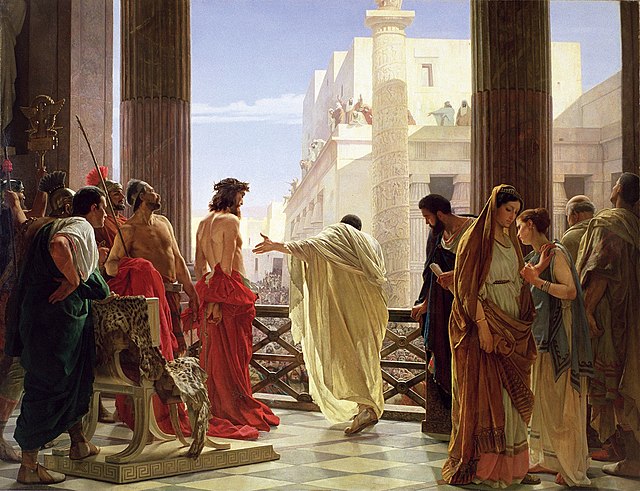
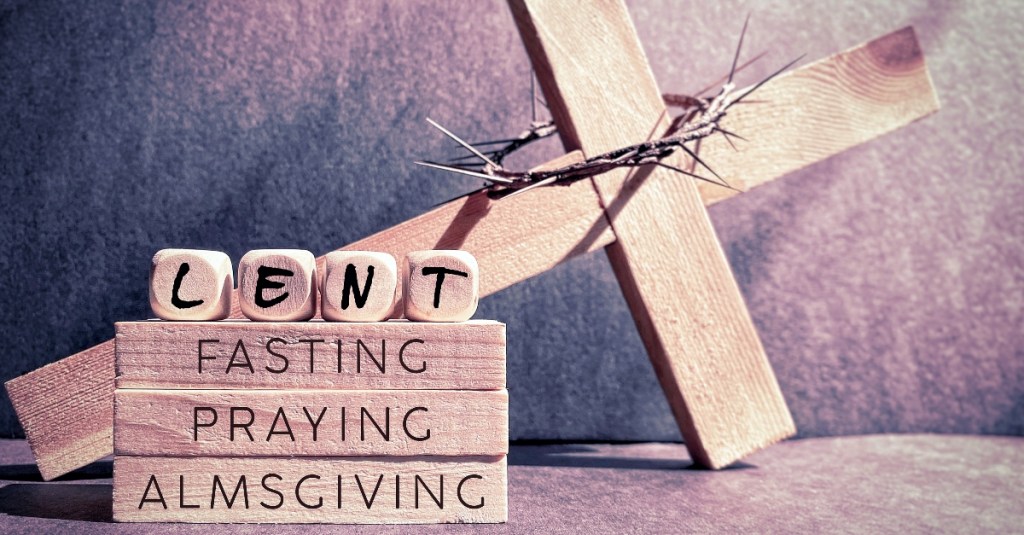
Lent is around the corner! It is an enriching season of penitence and prayer. In this season we renew our baptismal promises and pray for all those to be baptized at Easter. Easter is the central event of the whole year!
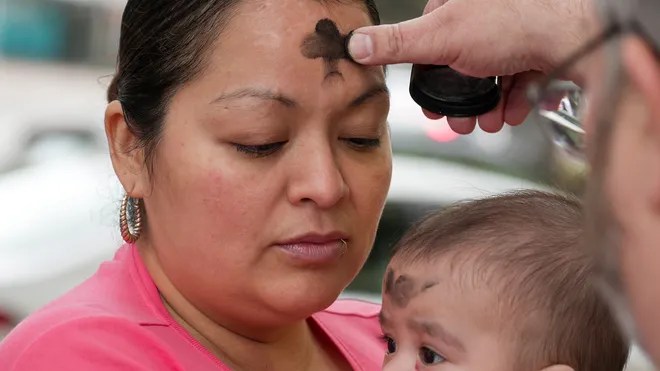
For all Roman Catholics and some Christian communities, Lent begins on Wednesday, March 5. Our Orthodox siblings start Great Lent on Monday, March 3. In a rare coincidence, Orthodox and Catholics will celebrate Easter at the same time on Sunday, April 20.
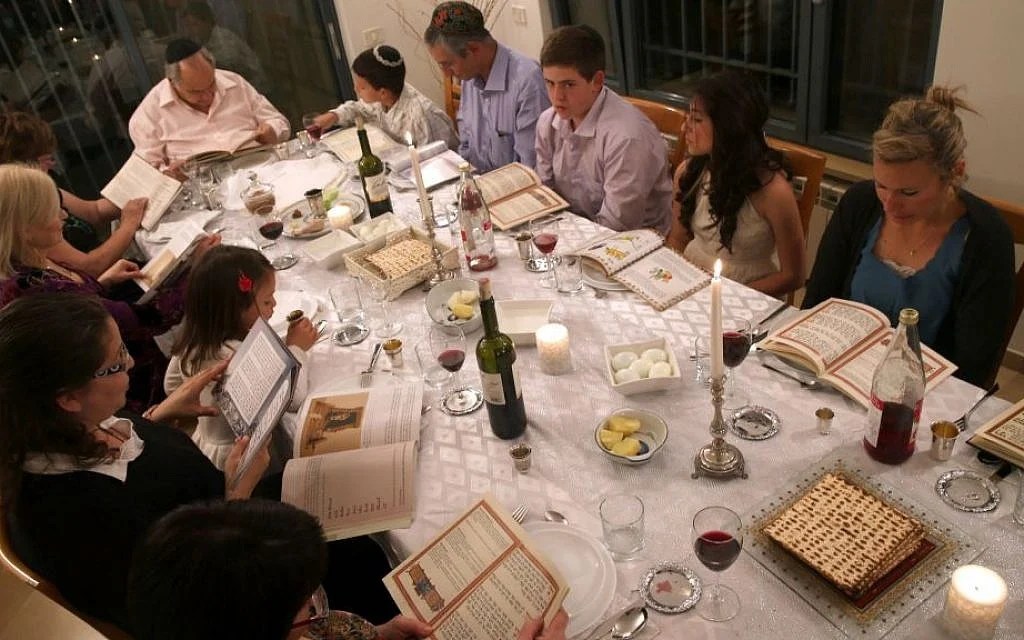
Our Jewish siblings celebrate Passover from April 12 through April 20. In the spirit of this penitential season, Islam observes Ramadan at sunset on February 28 through March 29.

We hold everyone in prayer during these holy days.
Here are four books I recommend for Lent.
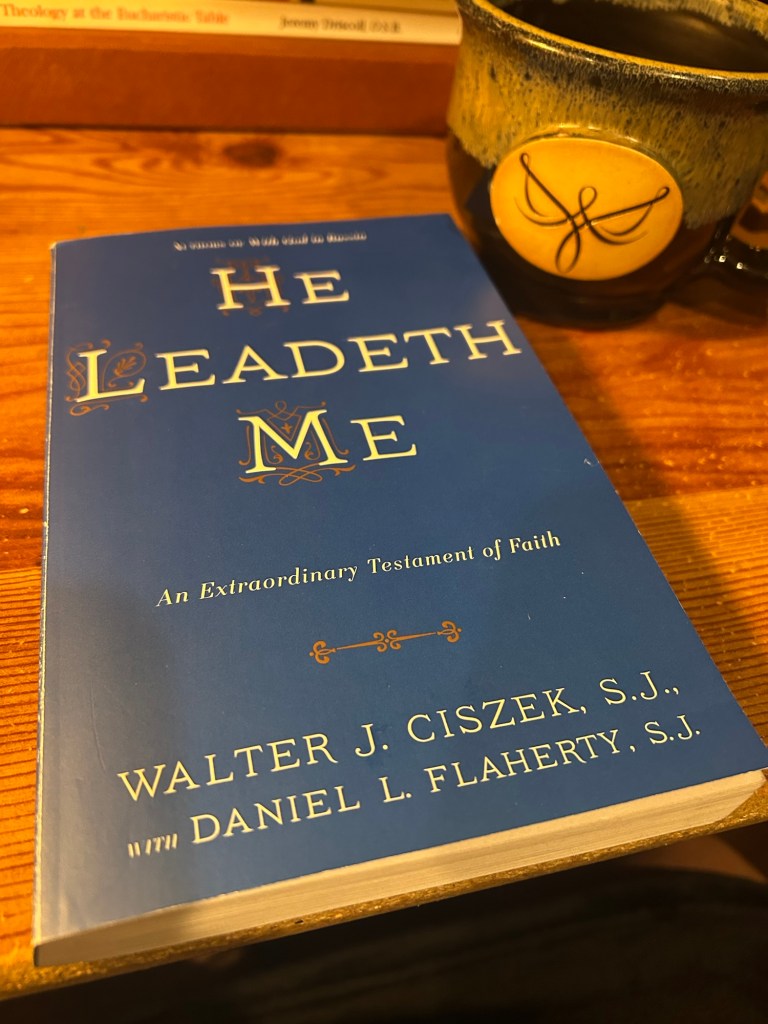
4. I read this book a few weeks ago. Bishop Vann recommended it to our Zoom community. He gave it as a Christmas gift to all his priests in his Diocese. He Leadeth Me is the passionate story of Jesuit Father Walter J. Ciszek. He is accused as a “Vatican spy.” This story captures his spiritual journey for the past 23 years in that prison. He takes us through the struggle of his interior life and how he recognized God in it all.
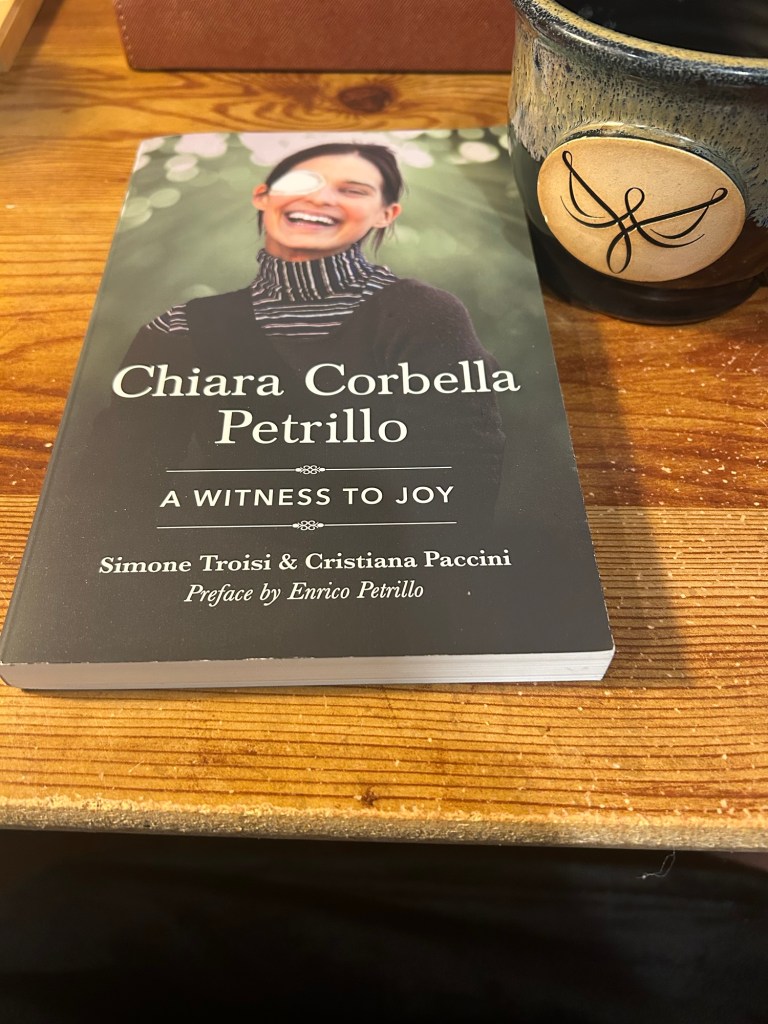
3. Chiara’s beautiful smile moved me to this book. Chiara Corbella Petrillo: A Witness to Joy is a story of a mother and wife whose vocation led her to embrace her sweet cross of suffering. A story of faith-filled love and joy suffering through terminal cancer.
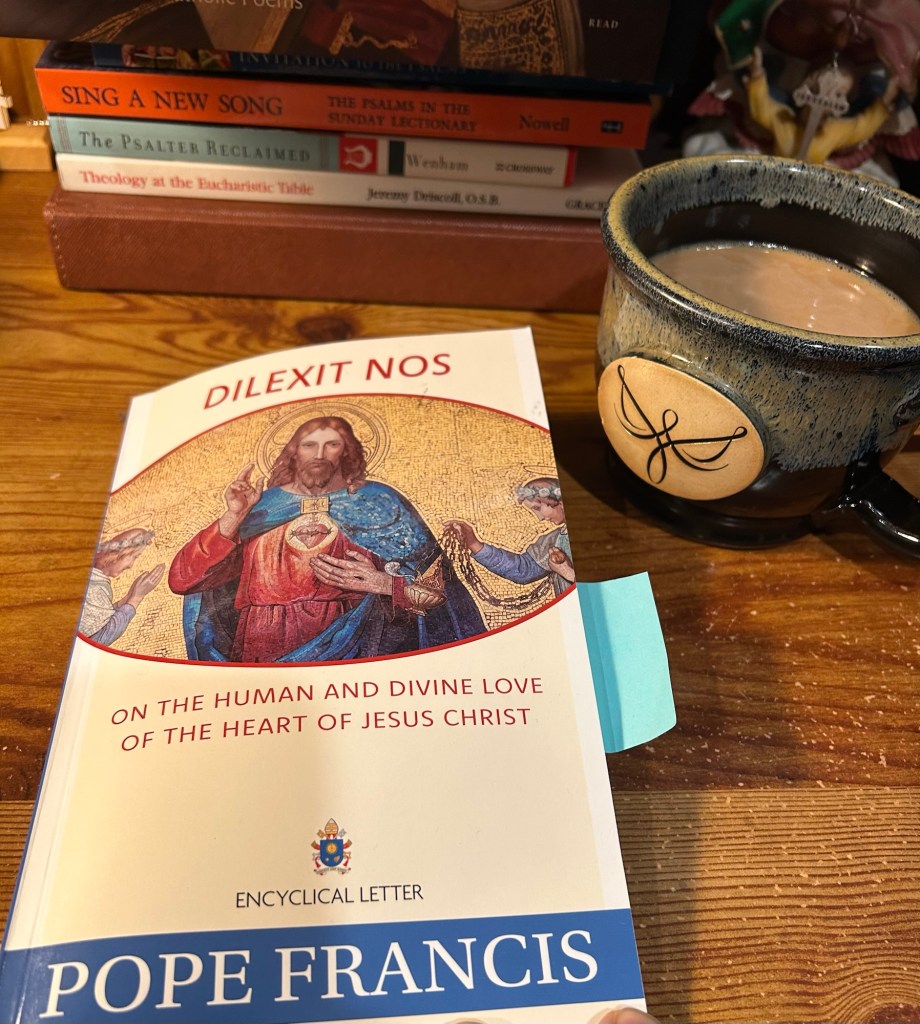
2. I am presently reading Pope Francis’ Dilexit nos: On the Human and Diving Love of the Heart of Jesus Christ. I grew up surrounded by this image of the Sacred Heart of Jesus. The Bishop of Rome takes me on a step by step discovery of the love of Jesus. This love is hidden in the furnace of his burning heart. This passionate and compassionate love reawakens my senses to the Paschal Mystery.
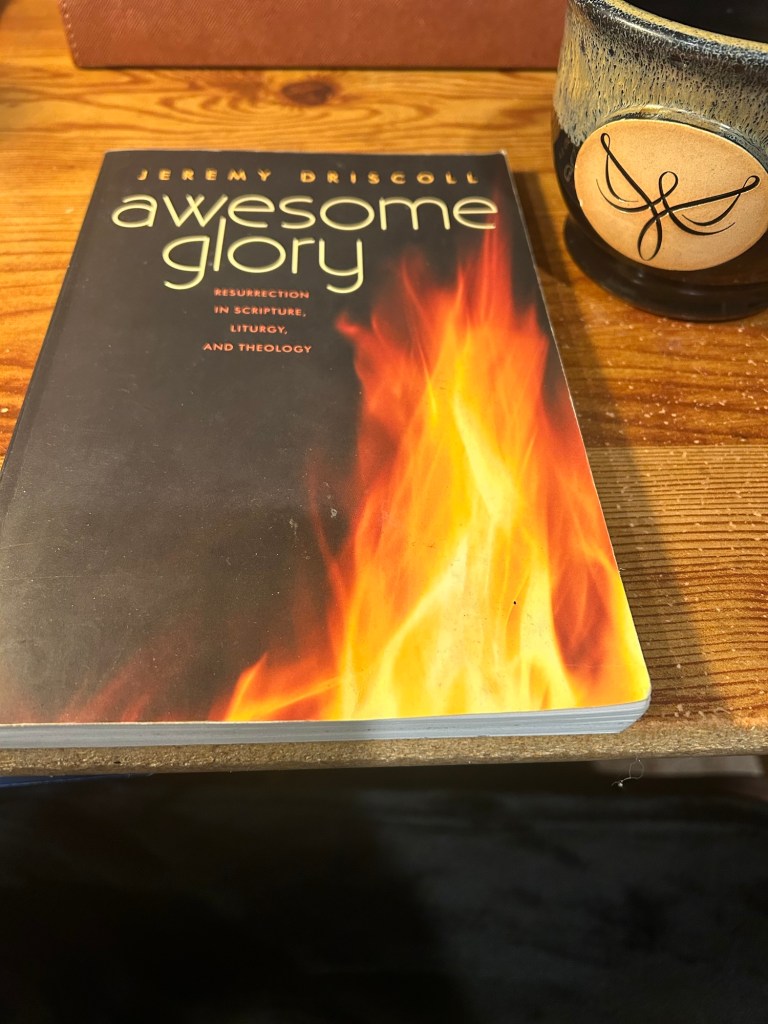
1. If you want a book that will take you step by step through the Easter Vigil this is it! Abbot Jeremy’s book Awesome Glory: Resurrection in Scripture, Liturgy, and Theology will enrich your experience of the Paschal Mystery. He will walk you through the ritual action, comment on scripture, and point us to Eucharist. This is the perfect book to read before the Triduum. It helps you enter its mysteries with greater awareness and prayer.
Coupled with these book recommendations are the Lenten disciplines listed below. Some of the language is pulled from our diocesan website, so that the language is clear.
Abstinence
All persons, 14 years and older, are obliged to abstain from meat on Ash Wednesday and all Fridays of Lent. Other forms of abstinence from alcoholic beverages, television, video games, the internet, and social media, are also beneficial.
Fasting
Everyone from ages 18 to 59 is obliged to fast on Ash Wednesday and Good Friday. Voluntary fasting on other weekdays of Lent, especially on Wednesdays and Fridays, is highly recommended.
Fasting is understood to mean that one full meal may be eaten. Two other small meals may be eaten, but together they should not equal a full meal. Eating between meals is not permitted.
When health or ability to work are seriously affected, neither the law of fasting nor the law of abstinence obliges. If in doubt, one’s parish priest or confessor should be consulted.
Airport workers, travelers, and others while on board ships or airplanes are dispensed from the laws of fast and abstinence for the duration of their journey (except on Good Friday). It is desirable that they perform some other pious act instead.
Prayer
Carve out time for deliberate conversation with God. This conversation can take the form of spontaneous prayer, traditional prayers, or making a visit to your local parish. Mass during the week is always a wonderful opportunity for worship.
Reconciliation
Take advantage of the tremendous gift of mercy and love in the Sacrament of Reconciliation. Lent is a privileged time to celebrate this sacrament. Many parishes will have times of Reconciliation available. In my diocese, there will be an opportunity for 24-hours with the Lord from March 28-29. Click here for the details.
Almsgiving
From earliest times giving to the poor, or almsgiving, has been an invaluable spiritual practice. Almsgiving is a religious duty, a form of penance, an expression of Christian charity, and an aid to interior conversion.
All Catholics are urged to give generously to aide the poor and support the charitable works of the Church.
Wishing you all a blessed and holy Lent!

 Enlarge my heart
You are welcome to leave a reply.