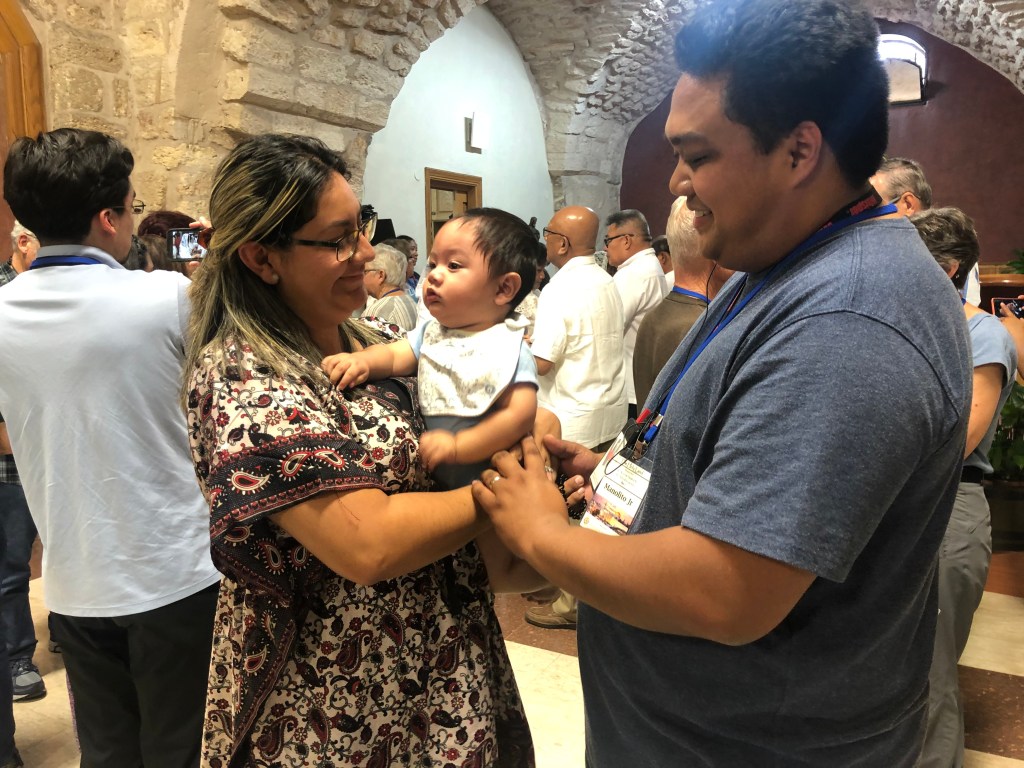
Right before the pandemic, we made our pilgrimage to the Holy Land. One memorable stop was to Cana in Galiee where Christ changed water into wine. In Cana, we renewed our vows.
To help capture the sentiments of today’s Gospel, here is a sonnet entitled Epiphany at Cana by Malcom Guite:
Here’s an epiphany to have and hold,
A truth that you can taste upon the tongue,
No distant shrines and canopies of gold
Or ladders to be clambered rung by rung,
But here and now, amidst your daily living,
Where you can taste and touch and feel and see,
The spring of love, the fount of all forgiving,
Flows when you need it, rich, abundant, free.Better than waters of some outer weeping,
That leave you still with all your hidden sin,
Here is a vintage richer for the keeping
That works its transformation from within.
‘What price?’ you ask me, as we raise the glass,
‘It cost our Saviour everything he has.’

Holding this sonnet in our hearts, I draw your attention to Paolo Veronse’s masterpiece of this Gospel scene. There’s much going on in this masterpiece.
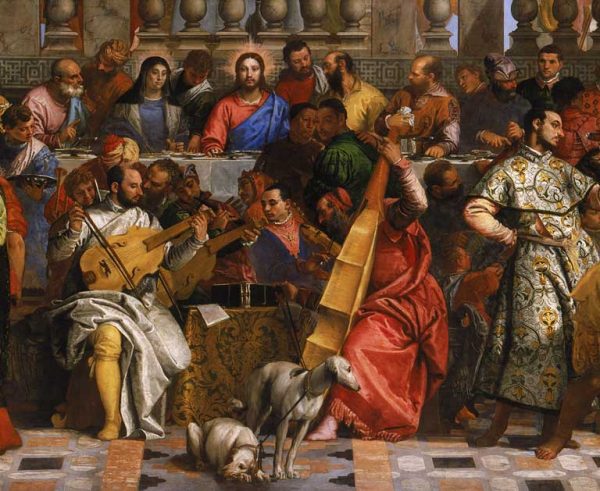
Surprisingly at the center of this work is Christ with his mother standing at his right. It is captivating to see Christ stare directly into the viewer’s eyes. His mother stands next to him.
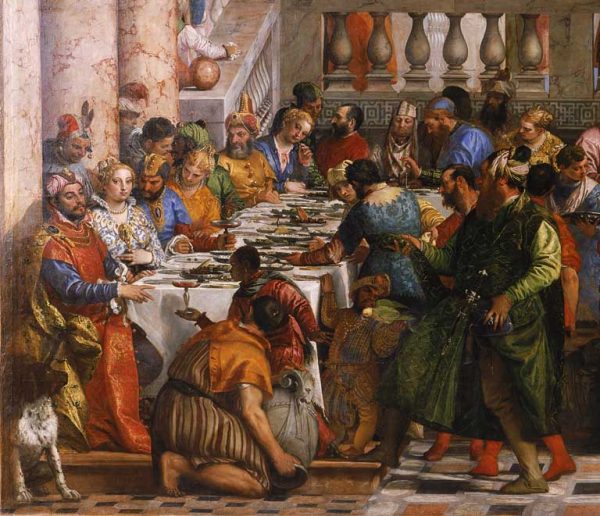
To the left side of this work, you see the bride. She does not look too happy. Maybe she realizes that the wine is already gone. The servant standing to the bride’s right is telling the person behind the bride that the wine has ran out. The servant at the bottom of the table is offering the groom a new glass of wine.

At the bottom right, the servants are filling the vessels with water.
Suddenly, in different vignettes of this Venetian wedding, the Miracle of Christ is about to burst onto the scene.
The first sign of John’s Gospel is the miracle at Cana. It is a sign because it points to the reality of Christ emptying himself at the Cross. As the sonnet suggests, the Savior gave everything he had to give us the best wine … blood coming from his side.
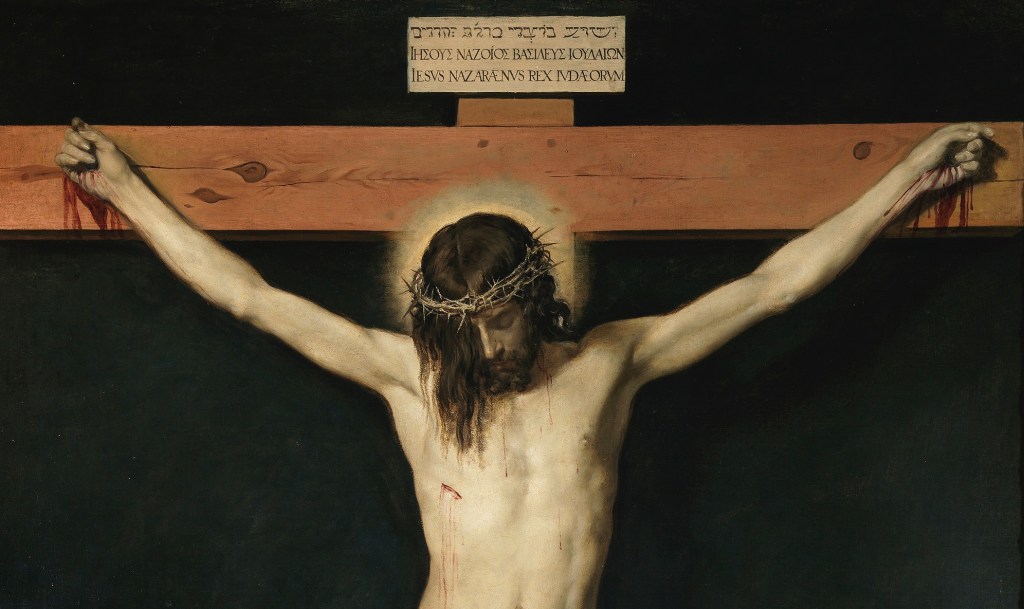
From the side a Christ, gushed forth blood and water: Eucharist and Baptism, food and sonship. Christ on his cross is what all the signs of John lead to. God weds himself to our humanity. This happens through suffering infused with divine love. He gives us the best of all food—himself.
Mary commanded us to do whatever he tells us at the Wedding at Cana. At the cross, she stands as a the Immaculate One, in absolute surrender to the will of God. Even at this moment, in her sorrow, we are invited to take her as our mother. She will always be faithful in leading us to Christ.
Let all our weddings be rich with love. May they be filled with the joy of good wine. Let them be rooted in the love of Christ. Let us imitate this love throughout our lives.

 Enlarge my heart
You are welcome to leave a reply.