The prophet Elijah witnesses God as the One who satisfies hunger and raises the dead. Elijah was hungry. God sent ravens to bring bread and meat in the morning and evening (1 Kings 17:1-7). God fills the hunger of the prophet through the raven.
The prophet Elijah also pleaded with God to raise the widow’s son to life. Through his intercession, God restored life (1 Kings 17:17-24).
We hear today’s First Reading between feeding the body and restoring life. Elijah encounters the widow of Zarephath (1 King 17:10-16). Elijah heard the command of God to find a widow who would feed him. The widow knew her death sentence was approaching. They had nothing. Yet, Elijah asked for water and cake. He uttered the promise that God provides for us even in our scarcity. Moved by this promise, the widow provided. The jar of flour did not go empty. The jug of oil did not run dry, as the LORD had foretold through Elijah.
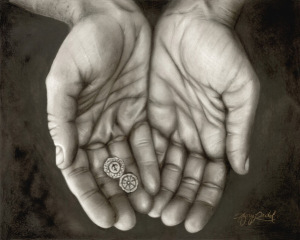
In Mark’s Gospel, Jesus observes how the widow gave two copper coins. She gave more than all the others who gave from her abundance. She gave from her poverty. The widow searched her interior life and found God at its center. She gave everything she had, knowing that God loved her. She knew God could satisfy her hunger and restore her life. She completely trusted that God provided for all her needs.
Two widows give us an example of absolute trust in God’s providence. Let the words of the psalmist assures us of God’s protection and care. The psalm says, “The LORD keeps faith forever, secures justice for the oppressed, gives food to the hungry. The LORD sets captives free.”


 Enlarge my heart
You are welcome to leave a reply.