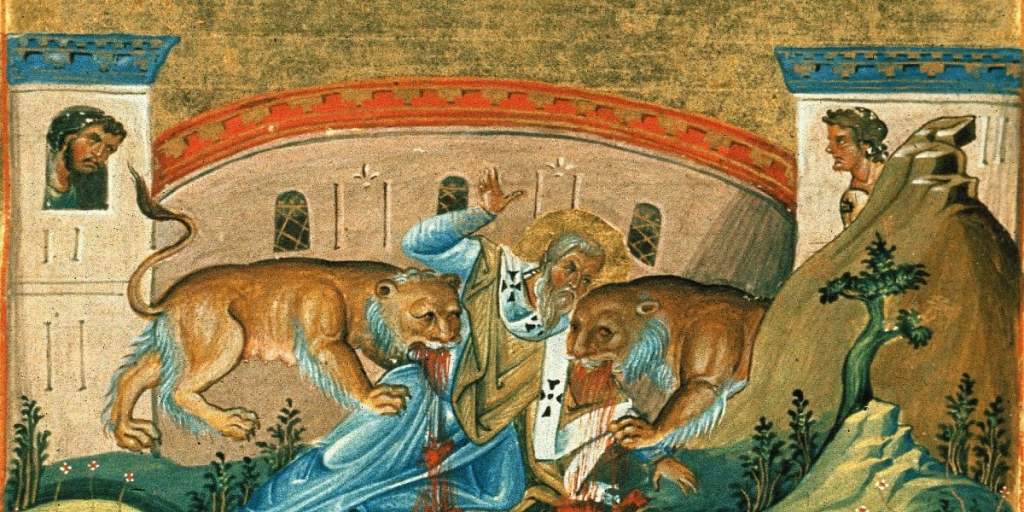
What are the marks of an authentic Christian? Let’s tip the hat to Ignatius of Antioch. He was the second successor to Saint Peter. He lived in the first 100 years of Christianity. At the end of this post, you’ll find a musical meditation worth the listen!
The overarching theme of Ignatius of Antioch was summarized in the unity of orthodox teaching, Eucharistic worship, and unity. The quotations that follow come from this book.
Ignatius found the Magnesians to be authentic Christians. He saw these Christians possessed a “well-disciplined and godly love” (1:2). They were united in their “faith and love” (1:2) as Christ was united in flesh and spirit. The unity of Christians focused on obedience to the bishop. This bishop was in “valid and authorized service” (4) regardless of their youthfulness.
Ignatius believed that obedience was rooted ultimately in obedience to the Father. When the presbyters, deacons, and laypeople obeyed the bishop, they respected the authority of God the Father. Each bishop understood his vocation as being sent by Christ as the Father sent Jesus. By obeying the bishop, we obey the Father “without any dissembling” (3:2). There is continuity in obedience; there is “complete unity” (13:2) among the Christians who defer to the bishop.
Faithful obedience draws the Christian into the divine life of the blessed Trinity. To model the blessed Trinity was to model unity. When Christians maintained unity, that meant they did not do anything apart from each other. Under the bishop’s leadership, an authentic Christian community had “one prayer, one petition, one mind, and one hope.” Their community was dominated by love and unsullied joy (7:1).
Let’s take a look at Ignatius’ confession. Ignatius was going to be a martyr “without interference” (1:2). He asked the Romans to pray for his strength. To be a Christian, he had to give body and soul as a sacrifice. He did not want Christians to make noise about losing his body in martyrdom. He believed it would be a “meaningless noise” (2:2). He wanted them to be a choir. He urged them to sing praises to the Father in Jesus Christ (2:2). He desired the crown of martyrdom as a perfect sacrifice.
In his obedience to die for Christ, Ignatius was clear that he was “voluntarily dying for Christ” (4:1) without interference. His primary witness was his martyrdom. His martyrdom gave him the hope to “rise to freedom” (4:3). This manner of dying was proof of faithful discipleship for it imitated the Passion of his God (6:3).
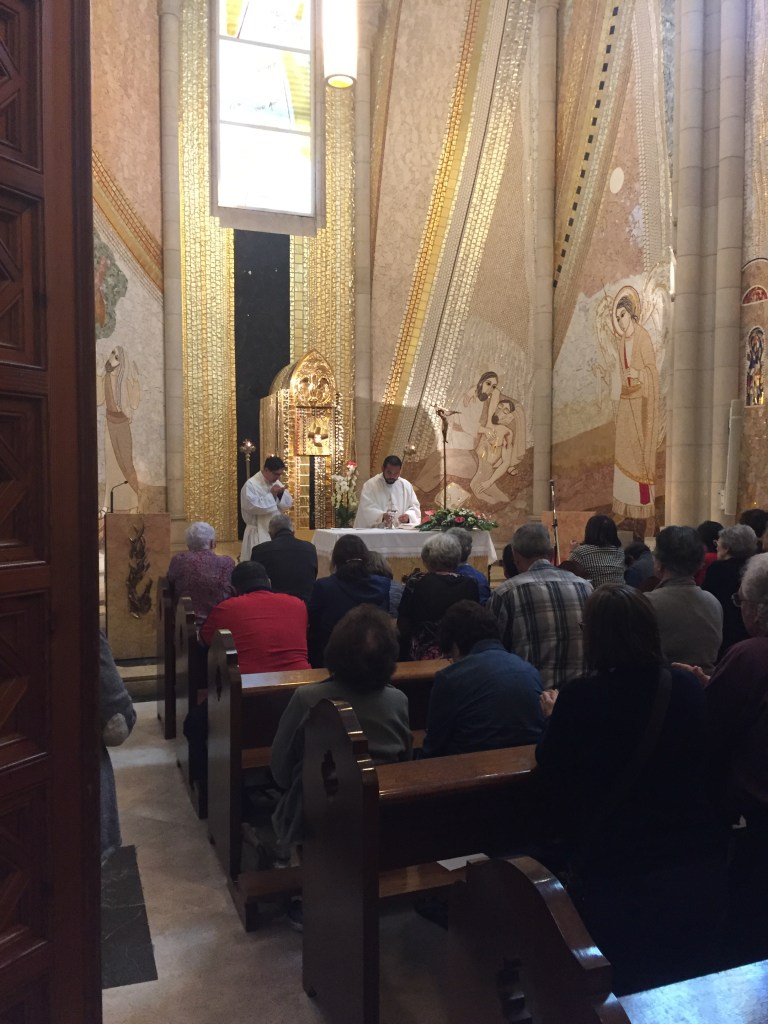
Christians were united in mind and prayer. They formed one community as they gathered around him at the altar to celebrate the Eucharist. They deeply understood the mystery of the Father sending the Son in the Holy Spirit.
Orthodox teaching, Eucharistic worship, and unity. These were the signs of the authentic Christian to which Ignatius offered his life freely to God.
Here is a recording of Lauren and I offering the famous prayer of another Ignatius in the tradition … the founder of the Society of Jesus. This was taken in a chapter of life where I was a musician at Saint Stephen Parish in the City. My time at this parish throughout my young adult life is a treasure. I worked with many fine musicians and have such wonderful memories of this chapter. The sentiments to this meditation are fitting after reading the life of Ignatius of Antioch. Enjoy!

 Enlarge my heart
You are welcome to leave a reply.