Is it reasonable to be rich?
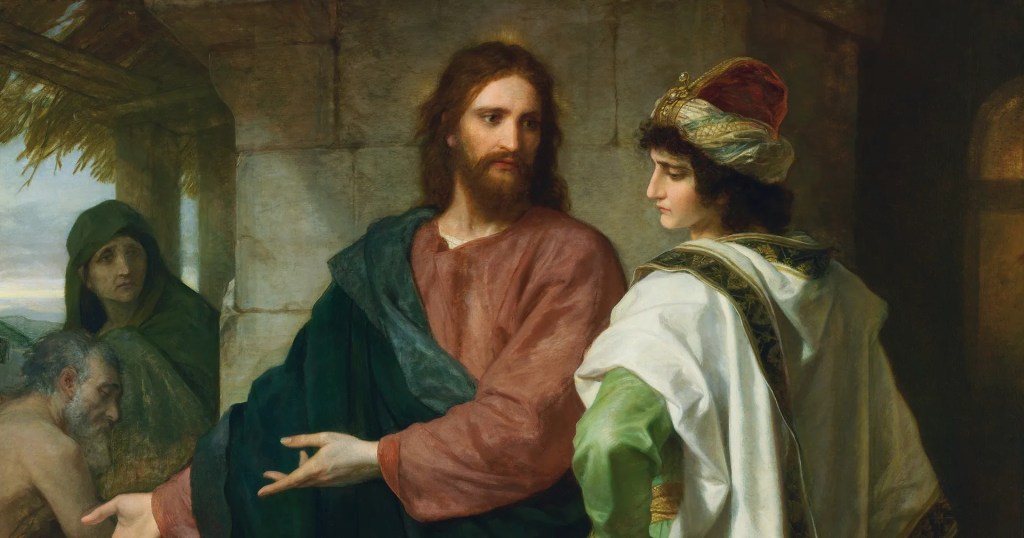
The popes have addressed the challenge of being rich. Pius XI spoke of this challenge when addressing the fist Beatitude of Jesus, “Blessed are the poor in spirit.” This beatitude suggests that the poor must use their wealth to serve others (Divini Redemptoris 44). Each disciple must be detached from riches to save themselves from anxiety about the future. Detachment from wealth makes a person more ready to be self-reliant on the Master (Compendium of the Catholic Church 532).
Pope Francis spoke about this idea of wealth suffocating the disciple. He said,
“Wealth ensures nothing. Indeed, once we think we are rich, we can become so self-satisfied that we leave no room for God’s word, for the love of our brothers and sisters, or for the enjoyment of the most important things in life. In this way, we miss out on the greatest treasure of all. That is why Jesus calls blessed those who are poor in spirit, those who have a poor heart, for there the Lord can enter with his perennial newness” (Gaudete et exsultate 68).
Being suffocated by wealth will not allow us to hold the most important treasure of all. Perhaps this is where the rich young man in today’s Gospel fell short in his conversation with the Master. He found security in his wealth and did not consider he die that day (Gaudete et exsultate 67).
The hyperbole of Jesus presents two extremes in today’s Gospel passage. There is the image of one colossal thing and one tiny thing: a camel and the eye of a needle. This imagery suggests the impossibility of the rich entering the kingdom of heaven.
Modern biblical scholars have significantly shifted in the understanding of this biblical passage. They have moved away from popularizing the Needle Gate Theory. There is no consistent trace of an actual gate called the Eye of a Needle in Jesus’ time and culture. This theory had the idea that there was a gate in Jerusalem for animals to pass through. A camel had to unload all the belongings on its back to fit through the gate. This is an imagery of a rich person letting go of all their riches to enter the kingdom of God.
In the Gospel of Matthew (19:24), the Greek term for the eye of a needle, trypēma raphis τρύπημα ῥαφίς, is a precise and informative term that refers to a hole. In Mark’s Account (10:25), the Greek is trymalias tēs rhaphidos τρυμαλιᾶς τῆς ῥαφίδος. Both are referring to the tailor’s needle. The Luke Account (18:25) gives another angle by using τρήματος βελόνης, a surgeon’s needle. From the most conservative sense, Jesus is not referencing a gate in Jerusalem.
We must take a more comprehensive view of why Jesus uses this hyperbole. The rich man’s question, is a pivotal moment in the Gospel. Jesus’ response to this question is crucial in understanding the deeper meaning of his teachings.
The man wanted to do something of his merit to make himself an heir to eternal life. Jesus listed the commandments and the man responded that he had been observant of the laws. At this moment, Jesus loved him and responded. This detail is unique only to Mark. It is as if Mark must have had a conversation later on with the Master.
In talking about this moment, Pope Benedict XVI said, “The Lord’s gaze is at the heart of this very special encounter and the whole Christian experience. To be sure, Christianity is not primarily a moral code. It is an experience of Jesus Christ who loves each of us personally, young and old, poor and rich. He loves us even when we turn away from him” (25th World Youth Day, 28 March 2010).
Jesus calls him to a radical call beyond observing the commands. He called him to total self-giving love. Jesus invited the rich man to sell all his possessions. Give his riches to the poor so that he has treasure in heaven. Then, finally, follow Jesus.
Pope Benedict XVI spoke about this intimate call to follow Jesus. When we follow Jesus, he is at the center of our whole existence. The pope said,
“Jesus invites his disciples to give their lives completely, without calculation or personal interest, with unreserved trust in God. The saints accept this demanding invitation and set out with humble docility in following the crucified and risen Christ. (25th World Youth Day, 28 March 2010).
Pope Francis also addresses a deliberate effort in pursuing the Lord. He said,
“… do not walk behind Jesus only when you want to, but seek him out every day; do not be content to keep the commandments, to give a little alms and say a few prayers: find in Him the God who always loves you; seek in Jesus the God who is the meaning of your life, the God who gives you the strength to give of yourself” (Pope Francis Homily, October 14, 2018).
Giving Jesus a percentage of our willingness or hearts to follow him is insufficient. Perhaps this is where the rich young man fell short. He was sad as he clung to his wealth for security. No one enters eternal life on their own merit. Entrance is by God’s mercy. To try to inherit eternal life on your own accord is impossible, hence the hyperbole of Jesus. If we store treasure and wealth in our hearts, there is no room for the only treasure that matters.
Apart from letting go riches there is also another relevant point. Jesus stopped on his journey and took time to answer the young man’s question. Jesus stops today to listen to you! Enter into a conversation with Jesus. Ask him the lingering questions in your heart. We must “develop your own conversation with Christ – a conversation which is of fundamental and essential importance for a young person” (St. John Paul II Dilecti amici 2).
This task and personal call is for us as individuals and as a whole Church. Together, we make our way to everlasting life. Pope Francis said,
“Are we a Church that only preaches good commandments or a Church that is a spouse, that launches herself forward in love for her Lord? Let us ask for the grace always to leave things behind for love of the Lord: to leave behind wealth, leave behind the yearning for status and power, leave behind structures that are no longer adequate for proclaiming the Gospel, those weights that slow down our mission, the strings that tie us to the world. Without a leap forward in love, our life and our Church become sick from “complacency and self-indulgence” (Evangelii Gaudium 95).
Life’s most significant treasure can capture our hearts. We can join others in the task of being Christ’s spouse rather than the lost disciple. Hold fast to the fact that Jesus gazed with love on this rich young man. Jesus invited him to do something great. Jesus invited him to serve others.
In his First Letter to Timothy (6:17-19) Saint Paul speaks plainly about what the rich are to do. To be rich is to be in service to others:
“Tell the rich in the present age not to be proud and not to rely on so uncertain a thing as wealth but rather on God, who richly provides us with all things for our enjoyment. Tell them to do good, to be rich in good works, to be generous, ready to share, thus accumulating as treasure a good foundation for the future, so as to win the life that is true life.”
Is it reasonable to be rich? Yes. To be rich in Christ. It is at the Cross event, receiving him in the Eucharist that we know we are completely loved by Jesus. Let us be on our way.

 Enlarge my heart
You are welcome to leave a reply.