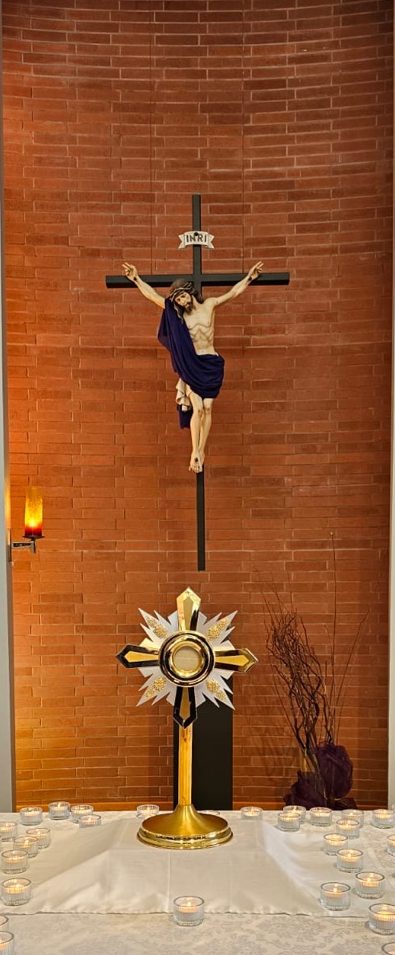
The most significant event in the Catholic American culture is the Eucharistic Congress in Indianapolis. After two months of accompanying our Lord through the four corners of North America, the pilgrimage has reached its climax with the largest gathering of Catholics nationwide. This Congress is a testament to the significance of our faith in the Eucharistic Lord. How can the Sunday scriptures inform us of this moment in American history? Jesus is the Good Shepherd who feeds us with the finest wheat!
In our First Reading, the prophet spoke of God’s displeasure with shepherds. These shepherds scatter the flock! When the flock is scattered, the thief steals the sheep. God promises to come to bring back the remnant flock into one fold. God promises that a new shepherd will come from David’s offspring. Therefore, the new Shepherd will also be a king who governs with wisdom, protects the sheep from harm, and prospers in justice. This man, who is a shepherd, king, and justice, will pasture the sheep into one fold and bring them to fresh meadows where they can find refreshment and multiply.
In the Second Reading, Paul reminds us that the ultimate task of the Good Shepherd is to lay down his life for his sheep. Paul reminds us that we have come close to God through the blood of Christ so that he might be our peace and restore us to the Father. Through his cross, he has gathered those far off and near into the life of God. No one is ever far from the love of Jesus.
In today’s Gospel, we hear how his heart pities the people, for they were like sheep without a shepherd. The word “pity” is weak in English. The word in Greek is splagchnizomai. It means being moved so deeply that you feel it in the gut. Jesus feels this immense feeling for these people for they failed to listen to the voice of the Good Shepherd who was in their midst.
Joseph Ratzinger talks about four essential motifs of the Good Shepherd with all its historical associations in the Old Testament. Jesus alone purifies these motifs and brings out their whole meaning.
First, the Good Shepherd gives life. The thief only wants to take the sheep and exploit it. Second, the Good Shepherd lays down his life for his sheep as a gift of himself, making the cross the center of the shepherd motif! Jesus freely gave his life for us. Third, the Shepherd and the sheep know each other. The Good Shepherd does not own the sheep; the sheep belong to him. There is an inner acceptance and profound sense of belonging to the Shepherd. Finally, there is only one Shepherd who desires unity. God’s prerogative is to reunite the divided and scattered Israel.
Ratzinger caught my attention on his third point. The Shepherd and the sheep know each other “by wishing them to be in the freedom of the truth. They belong to him through the oneness of “knowing,” through the communion in the truth that the Shepherd himself is. This is why he does not use them, but gives his life for them. Just as Logos and INcarnation, Logos and Passion belong together, so too knowing and self-giving is ultimately one” (282). To his point, belonging to the Shepherd is not about membership but the freedom of living in the truth of love, love that lays down his life for the other. This love enters into the life of the Trinity. This love engages with the emptying of the Son for the world. This love, this knowing, moves us into the knowing of the Father and the Son. The Shepherd’s love thrusts us into the mutual interweaving of Church and Trinity.
Through the Church’s liturgy, we meet the Good Shepherd. He speaks to us, draws us into his life, and feeds us with his life-giving bread. Thousands of pilgrims do not gather in Indianapolis to be with a symbol. They hear the voice of the Shepherd who is truly present with them. He desires to feed them with the finest food. They meet Jesus in his body, blood, soul, and divinity! They meet Jesus, who, at every Eucharist, desires to live in us. This communion with the Good Shepherd, this unity with our fellow believers, is a source of profound spiritual nourishment. We don’t have to pretend to be in Indianapolis to experience this reality. We go to Eucharist at our parish and meet the Lord there – meet the Good Shepherd. This world is hungry for all the wrong things these days. We know where the actual food that will satisfy our hunger is!
Jesus feeds us because he is the Shepherd. In our First Reading, the prophet spoke of God’s displeasure with shepherds. They scatter the flock! God promises to come to bring back the remnant flock into one fold. God promises that a new shepherd will come from David’s offspring. Therefore, the new Shepherd will also be a king who governs with wisdom, protects people from harm, and prospers in justice. This man, who is a shepherd, king, and justice, will pasture the sheep into one fold and bring them to fresh meadows where they can find refreshment and multiply.
Jesus is not only a shepherd. He is the Good Shepherd. In John’s account, before Jesus declares himself the Good Shepherd, he tells his listeners that he is the gate. No one comes to the sheepfold without coming through the gate. For the sheep to recognize the voice of any shepherd, they must recognize the voice of Jesus speaking through them.
The Shepherd cares for the sheep, and at the same time, the sheep feel a sense of freedom to graze, always recognizing the voice of their Shepherd and knowing his call.
The ultimate task of the Good Shepherd is to lay down his life for his sheep. Saint Paul reminds us that we have come close to God through the blood of Christ so that he might be our peace and restore us to the Father. Through his cross, he has gathered those far off and near into the life of God. No one is ever far from the love of Jesus. In today’s Gospel, we hear how his heart pities the people, for they were like sheep without a shepherd. They failed to listen to the voice of the Good Shepherd who was in their midst.
Joseph Ratzinger talks about four essential motifs of the Good Shepherd with all its historical associations in the Old Testament. Jesus alone purifies these motifs and brings out their whole meaning.
First, the Good Shepherd gives life. The thief only wants to take the sheep and exploit it. Second, the Good Shepherd lays down his life for his sheep as a gift of himself, making the cross the center of the shepherd motif! Jesus freely gave his life for us. Third, the Shepherd and the sheep know each other. The Good Shepherd does not own the sheep; the sheep belong to him. There is an inner acceptance and inner belonging. Finally, there is only one Shepherd who desires unity. God’s prerogative is to reunite the divided and scattered Israel.
Thousands of pilgrims do not gather in Indianapolis to be with a symbol. They hear the voice of the Shepherd who is truly present with them. He desires to feed them with the finest food. They meet Jesus in his body, blood, soul, and divinity! They meet Jesus, who, at every Eucharist, desires to live in us. We don’t have to pretend to be in Indianapolis to experience this reality. We go to Eucharist at our parish and meet the Lord there – meet the Good Shepherd. This world is hungry for all the wrong things these days. We know where the actual food that will satisfy our hunger is!
Jesus feeds us because he is the shepherd. In our First Reading, the prophet spoke of God’s displeasure with shepherds. They scatter the flock! God promises to come to bring back the remnant flock into one fold. God promises that a new shepherd will come from David’s offspring. Therefore, the new shepherd will also be a king who governs with wisdom, protects people from harm, and prospers in justice. This man, who is a shepherd, king, and justice, will pasture the sheep into one fold and bring them to their meadows where they can find refreshment and multiply.
Jesus is not only a shepherd. He is the Good Shepherd. In John’s account, before Jesus declares himself the Good Shepherd, he tells his listeners that he is the gate. No one comes to the sheepfold without coming through the gate. For the sheep to recognize the voice of any shepherd, they must recognize the voice of Jesus speaking through them. The ultimate task of the Good Shepherd is to lay down his life for his sheep. He raises us through his body. Saint Paul reminds us that we have come close to God through the blood of Christ so that he might be our peace and restore us to the Father. Through his cross, he has gathered those far off and near into the life of God. No one is ever far from the love of Jesus. In today’s Gospel, we hear how his heart pities the people, for they were like sheep without a shepherd.
Jesus’ relentless pursuit of us is a testament to his unwavering love and care. Even when we think we can escape, he will find us. He will search for us when we are lost because we are precious to him. He demonstrates love by laying his life down for us and elevates this love by feeding us with his very self.
Thousands of pilgrims do not gather in Indianapolis to be with a symbol. They come to meet Jesus, who is sacramentally present and truly present! They meet Jesus, who, at every Eucharist, desires to live in us and brings us to fresh meadows. We don’t have to pretend to be in Indianapolis to experience this reality. We go to Eucharist at our parish and meet the Lord there – meet the Good Shepherd.
 Enlarge my heart
You are welcome to leave a reply.