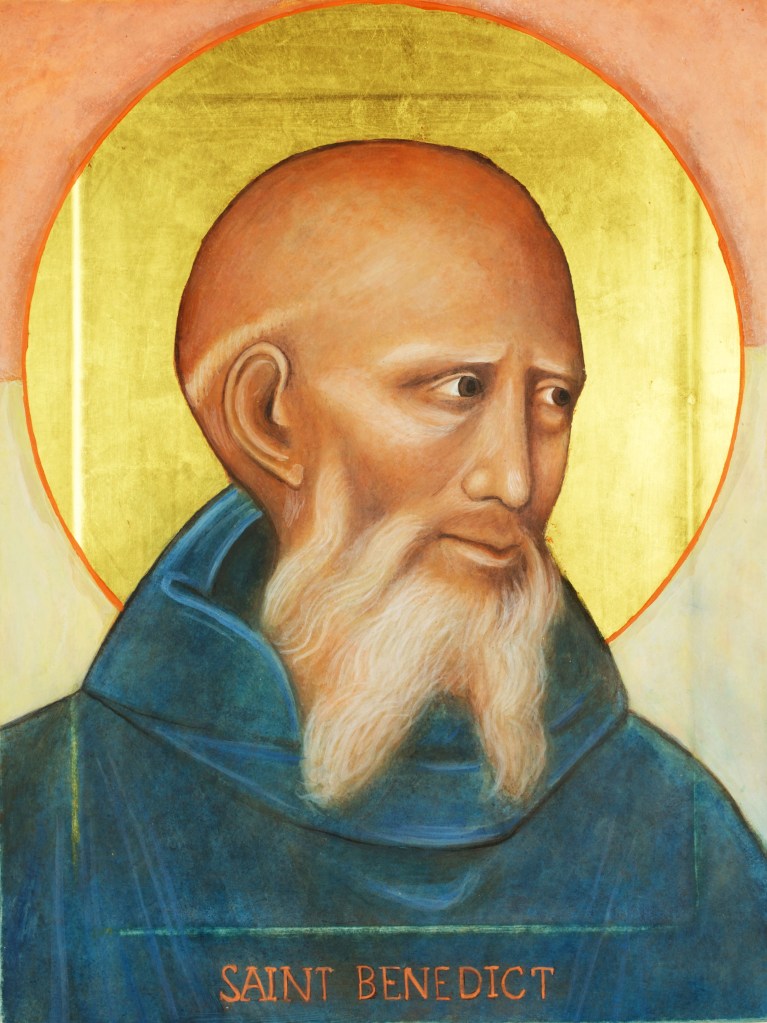
Benedict, the Patron of Western Monasticism, was a unique figure who allowed his interior life to shape his worldview. His profound awareness of God’s presence in his time led him to establish monasteries as spaces for spiritual encounters. In these communities, the abbot assumed the role of Christ, fostering a delicate balance between interior life, prayer, work, and practical needs. This unique approach created a ‘school in the service of the Lord’ (Rule Prol. 45), With Christ as the head Teacher, embodied in the abbot.
The abbot must seek out “wayward brothers” within the community to be a great physician and imitate the care of the Good Shepherd (Rule 27). His role is demanding and difficult because he holds the place of Christ in the monastery, “directing souls and serving a variety of temperaments, coaxing, reproving and encouraging as appropriate” (Rule 2:31).
Benedict was not only a man of his time but also a forward-thinker. He recognized the wisdom of young people and believed that God spoke to them. In his Rule, he advocated for the elders to listen to the young, a notion that was likely controversial in its time but one that underscored his progressive views.
Benedict aimed to please God: soli Deo placere desiderans. May we also desire to place our energies in the will of an awesome God.
 Enlarge my heart
You are welcome to leave a reply.