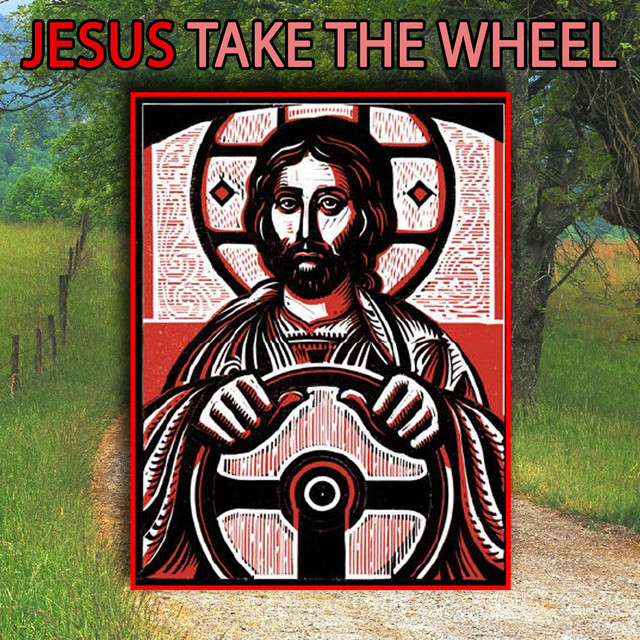
I cannot even begin to tell you how often I preferred to be the driver rather than the passenger in my young adult life. I wanted to be somewhere at a particular time, and the only way to do that was to take the most efficient route.
As the years passed, my driving habits remained tempered, but a significant change occurred. I began to understand the importance of relinquishing control. This realization, this truth of life, became clear—we are not the ones in power. God is the driver who invites us to sit in the passenger seat as companions with God.
There are oodles of images around biology and agriculture in today’s readings (Ezekiel 17:22-24; Psalm 92; 2 Corinthians 5:6-10); Mark 4:26-34). We see pictures of solid trees and the tiniest seed growing to its full potential. The cedar, addressed by the prophet Ezekiel, was a solid evergreen used for the Temple of Solomon, and the Egyptians used its wood to build their ships. The growth of anything worthwhile in nature and beautiful things takes time. I am in awe when I see an attractive evergreen tree with its luscious shades and plentiful branches for the squirrels and other critters to run around to build their homes. When I see my sun swing on its branches, the strength it has to hold him and not bend to his weight. The creative and loving God carves out all these things that make a tree momentous in stature. It is all done in God’s perfect time.
Similarly, in our spiritual journey, we must embrace God’s creative hand and the virtues of patience, openness, and humility like rain, sun, and soil. These are the tools that allow God to shape our lives into something beautiful and robust. Saint Paul reminds us that our ultimate goal, whether we are near or far from the Lord, is to ‘aspire to please him.’ Saint Benedict echoes this sentiment, emphasizing that the Lord patiently waits for us ‘daily to put into practice, as we should, his holy teachings’ (RB Prologue 35). In his boundless love, the Lord does not desire the sinner’s death but their return to him and life.
One crucial practice we can incorporate this week is the cultivation of silence. Just as all things in nature grow at their own pace and in silence, so too does our spiritual growth. Saint Benedict underscores the value of silence when he discusses the restraint of speech. He states, ” Speaking and teaching are the master’s task; the disciple is to be silent and listen” (RB 6:3-6).
May we carve out silence so we hear God speaking, so that God can speak life into us. We foster silence so God can make us grow at our speed, in a way that pleases God, to give God perfect praise. Jesus, take the wheel!
 Enlarge my heart
You are welcome to leave a reply.